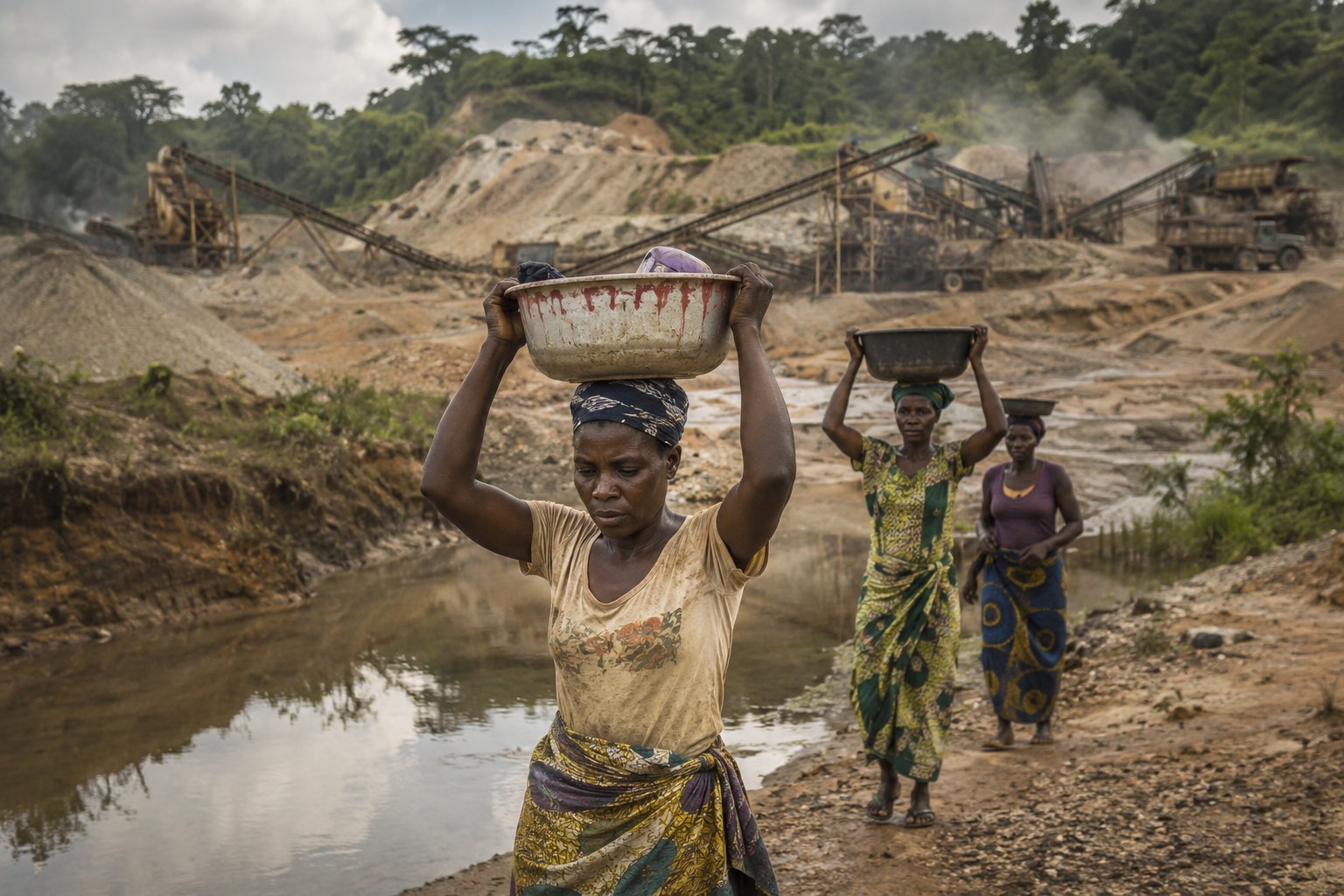

......As Nigeria expands oil, mining and lithium production, women in host communities remain under-represented in decisions.
Women are bearing many of the social and economic costs of Nigeria's extractive industries while remaining largely absent from the decisions that determine how affected communities benefit, journalists have been told.
Speakers at a training on reporting women and extraction said the problem was becoming more urgent as Nigeria expands mining and positions minerals such as lithium as part of its economic diversification and energy-transition strategy.
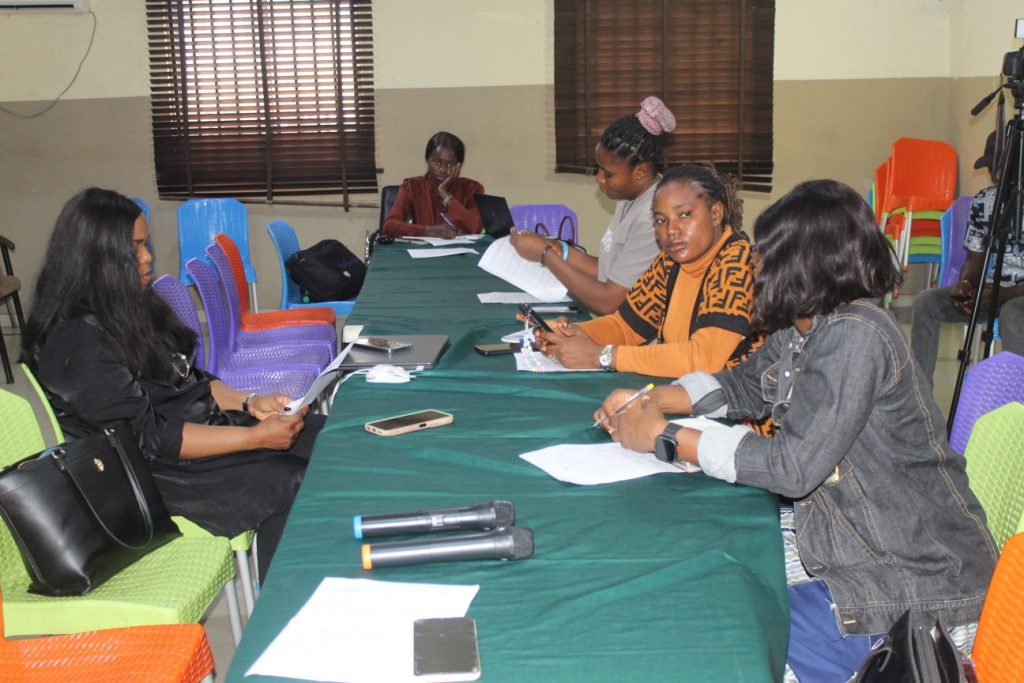
The training, organised around the theme “Empowering Women Journalists for Effective Reporting of Extractive Impacts in Nigeria's Environmental Hotspots”, brought together journalists and researchers to examine the environmental, economic, health and human-rights consequences of extraction.
Linda Amadi, Project Officer at Renevlyn Development Initiative (RDI), said journalists needed to look beyond the conventional focus on oil-producing communities and examine how extraction affects women.
“Whatever affects one woman affects everyone else.”
She said extraction covered more than oil and gas, pointing to sand mining and other activities taking place along Nigeria's coastlines and in other parts of the country.
The argument comes as the government seeks to increase investment in solid minerals and local processing.
In July, President Bola Tinubu commissioned a lithium processing plant in Nasarawa State with a stated capacity of 6,000 metric tonnes of lithium ore a day.
The government has presented such projects as part of efforts to move Nigeria from exporting raw minerals towards domestic processing and value addition.
But the speakers warned that expanding extraction without stronger community participation could reproduce problems already associated with oil-producing areas.
Women are often missing from the table
Faith Nwàdishi, Executive Director of the Centre for Transparency Advocacy, said one of the most important questions for journalists was not simply how much a community received from an extractive project, but who decided what the community needed.
She said women were frequently absent from community development committees and negotiations with mining companies.
“If you ask, what is the state of women within the strategies community, we find that when it comes to decision-making, women are not on the table,” she said.
That absence matters because community development agreements and other benefit-sharing arrangements can determine whether communities receive infrastructure, healthcare, employment opportunities or other forms of support.
Nigeria's Minerals and Mining Act 2007 requires certain mining operators to enter into Community Development Agreements with host communities.
The law also contains provisions covering compensation, pollution, restoration of mined land and environmental obligations.
Yet implementation remains a concern.
In September 2025, the Federal Government said more than 2,300 mineral titles had been issued in 2023 and 2024, while only 342 Community Development Agreements had been concluded.
It subsequently gave mining and quarrying companies a deadline to finalise outstanding agreements.
The figures do not establish how many women participated in those agreements.
That is precisely the gap the training urged journalists to investigate.
Also Read: Customs, Fire Service, Unilever Sign MoUs on Safety, Counterfeit Goods
Nwàdishi suggested reporters ask: Who negotiated the agreement?
Were women involved?
Was the agreement made public?
What was promised?
What has actually been delivered?
Oil sector shows a persistent gender gapThe exclusion is not limited to community negotiations.
Data from the Nigeria Extractive Industries Transparency Initiative (NEITI) shows that women remain a minority of the formal oil and gas workforce.
NEITI's 2022 audit recorded 6,728 employees among the companies covered, including 1,163 women, or 17%.
For 2023, the number of employees increased to about 8,694, but women's share fell to 16%, according to figures cited from NEITI's latest reporting.
That means the increase in the number of women employed did not translate into greater representation overall.
The training challenged journalists to go beyond workforce numbers and ask what jobs women hold, how many reach senior management, whether they receive equal opportunities and whether companies are addressing barriers to entry.
Vanessa Adie Offiong, an international journalist, also urged journalists to report women who are succeeding in the sector.
She argued that coverage should not portray women only as victims of pollution, displacement or poverty.
Women working as engineers, researchers, entrepreneurs, managers and community leaders also deserve visibility, she said.
That would provide a more complete picture of women's relationship with the extractive economy.
The new lithium rush raises fresh questions
The concern takes on added significance as Nigeria's mining sector changes.
Nigeria is seeking to become a bigger player in the global supply chain for transition minerals used in technologies such as batteries and renewable-energy systems.
Lithium has become one of the most visible examples.
A $250m lithium processing facility commissioned in Nasarawa in July has a stated capacity of 6,000 tonnes of ore a day, according to the Federal Government.
The opportunity is potentially significant for jobs, industrial development and government revenue.
But Abiose Adam, a media scholar, researcher and journalist at the University of Tennessee, warned that the transition away from fossil fuels could create a new generation of environmental and social pressures if mining is not properly governed.
The central question, he suggested, should not simply be whether Nigeria can extract minerals needed for the energy transition.
It should also be what happens to the communities where those minerals are found.
The warning is particularly relevant because Nigeria already has experience of the social costs associated with resource extraction.
Lessons from the Niger Delta
The Niger Delta remains the clearest example.
For decades, oil production has generated revenue for Nigeria while many communities have complained about pollution, loss of farmland, damaged fishing grounds and inadequate development.
Women have also played a prominent role in challenging oil companies.
In July and August 2002, women from communities in Delta and Bayelsa states staged protests against oil companies, demanding better living conditions, compensation and sustainable livelihoods.
Amnesty International described the protests as a landmark women's rights mobilisation.
Human Rights Watch documented occupations of oil facilities by women who demanded jobs, schools, electricity, water and other community benefits.
Those protests demonstrate that women are not merely passive recipients of the effects of extraction.
They have historically organised, negotiated and confronted companies and governments over resource governance.
The training argued that journalism should reflect both sides of that story: women's vulnerability and their agency.
Extraction is also a mental-health story
Oluchi Joy Robert, a Campaign Advisor at RDI, urged journalists to examine the psychological consequences of environmental damage.
She said reporting should not stop at the statement that an oil spill, mining operation or other environmental incident has occurred.
Instead, journalists should ask what changed in people's daily lives.
“What did the spillage change about water, about food, about income, about safety, about care work and women's justice?” she asked.
She proposed five areas for reporters to examine:
Environment: What changed in the water, land, air, fish or farms?
Money: How did the change affect household income and food costs?
Mind: What happened to sleep, anxiety, fear, anger and social relationships?
Coping: What did people begin doing to survive the pressure, and what risks followed?
Body and dignity: What changed in healthcare, privacy, safety and access to basic services?
The approach is important because environmental damage can produce consequences that are not immediately visible.
A woman who loses access to clean water may spend more time searching for another source.
A farmer who loses productive land may lose income. A mother who loses a livelihood may have to take on additional work to feed her children.
Each consequence can create further economic and psychological pressure.
Robert also urged journalists to revisit affected women after the initial report.
“Report the woman three months later.”
That follow-up, she argued, can reveal whether promised assistance arrived, whether livelihoods recovered and whether the psychological effects of the crisis continued.
The hidden cost of reaching mining communities
Blessing Oladunjoye, Editor-in-Chief of BONews Service, brought another dimension to the discussion: the risks journalists themselves face when reporting from mining and extraction sites.
She described difficult journeys, insecure terrain, language barriers and the risks of depending on local fixers.
In one case, she said, a fixer failed to interpret part of a woman's testimony because the woman's account could have implicated people connected to the community.
The incident illustrates a broader reporting problem.
A journalist may believe they have interviewed a source accurately while missing crucial information because they do not understand the local language.
Oladunjoye therefore urged reporters to question information supplied by intermediaries and build sufficient trust with sources to obtain their accounts directly where possible.
She also warned journalists against treating women as a single category.
A woman who is a community leader may have a very different experience from a young woman, a widow, a woman with a disability or someone whose livelihood depends directly on farming or fishing.
“Sometimes you need to ask extra questions,” she said.
“You need to also check who is affected, who is benefiting, and whose voice may be missing.”
Human rights obligations already exist
Rachel Greenwood, a human-rights and international-development professional, placed the issue within existing international and African human-rights frameworks.
Nigeria ratified the Convention on the Elimination of All Forms of Discrimination against Women (CEDAW) in 1985.
Other instruments, including the International Covenant on Economic, Social and Cultural Rights and African human-rights frameworks, provide protections relevant to health, equality, livelihoods and environmental rights.
The point, Greenwood argued, is not simply to know that these instruments exist.
Journalists can use them to ask whether governments and companies are meeting the commitments they have already accepted.
That shifts environmental reporting from simply documenting damage towards examining rights, responsibilities and remedies.
What happens to the promises?
One recurring theme across the training was accountability.
Companies often negotiate agreements with host communities that include commitments to provide infrastructure or other benefits.
But Vanessa Offiong argued that journalists should return to those agreements and check whether the promises were fulfilled.
That means obtaining copies of agreements, identifying deadlines and beneficiaries, checking budgets and visiting project sites.
It also means asking women whether they participated in determining the projects.
A health centre built without equipment, a water project that does not provide safe water or a skills programme that women did not request may satisfy a formal commitment without addressing the underlying problem.
This is where the gap between benefit on paper and benefit in practice becomes a story.
Nigeria cannot repeat the old extractive model
The emerging lithium industry presents Nigeria with an opportunity to learn from the oil sector rather than repeat its mistakes.
The government has already created mechanisms intended to increase benefits for host communities.
Under the Petroleum Industry Act, upstream operators must establish Host Community Development Trusts.
The law provides for community participation and requires operators to contribute to the trusts based on operating expenditure.
NUPRC says the contribution is 3% of the previous year's operating expenditure.
The challenge is ensuring that such mechanisms produce meaningful and inclusive development.
The same question applies to mining.
The Minerals and Mining Act provides for Community Development Agreements, environmental obligations and compensation.
Yet the gap between legal requirements and implementation remains a major accountability issue.
For women, there is an additional question: who gets to decide what development looks like?
From victims to decision-makers
The strongest message from the training was that reporting on women and extraction should not become another exercise in portraying women as helpless victims.
Women can be affected by pollution and displacement while also negotiating with companies, running businesses, farming, trading, organising communities and leading campaigns.
They can also be engineers, scientists, executives and policymakers.
That balance matters because the absence of women from decision-making can itself become part of the environmental story.
If women are responsible for securing water, food and household care, excluding them from decisions about land, water and community development risks producing policies that overlook their everyday realities.
The question for journalists, therefore, is no longer simply whether extraction harms communities.
It is who bears the harm, who receives the benefits, who makes the decisions and who has the power to demand a remedy.
As Nigeria pushes deeper into mining and the global energy-transition economy, those questions will become harder to ignore.


Abiodun Jonpo
Nawa o