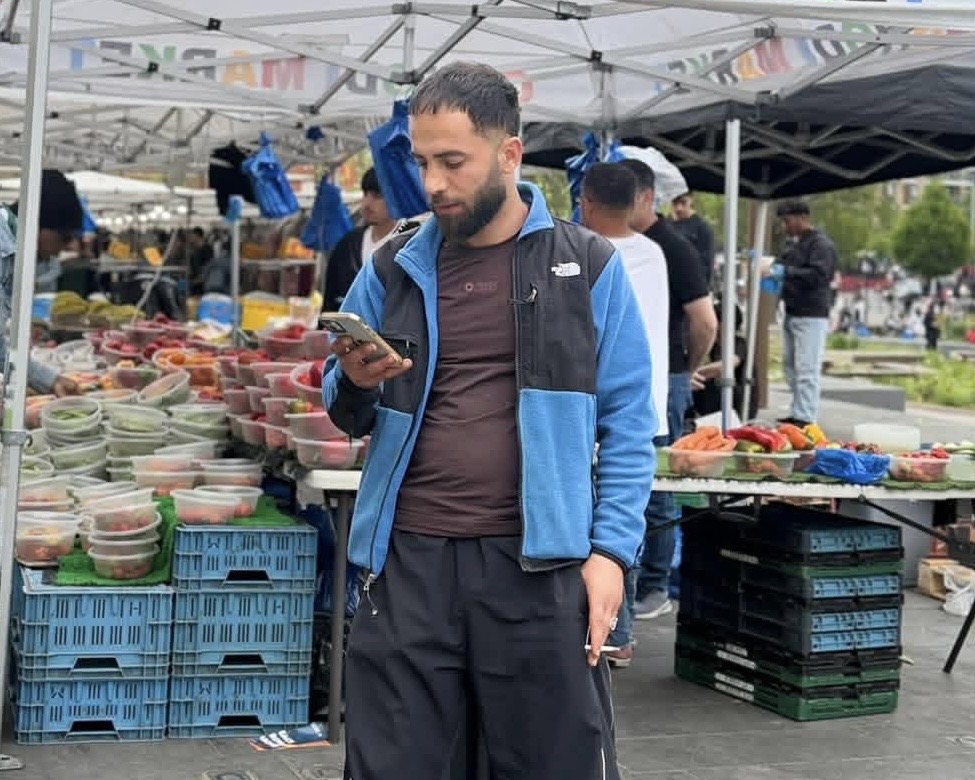

An Iraqi trader working in a London market has learnt to speak Yoruba after spending about three years interacting with Yoruba-speaking customers.
The trader, who has adopted the Yoruba name Olakunle Oshodi, said he learnt the language informally from customers at Woolwich Market in south-east London.
He told The Punch that about 95% of his customers are Yoruba and that their conversations initially sparked his curiosity about the language.
“At first, I did not understand what they were saying, so I became curious and started asking them to interpret the words they used. That was how I gradually started learning Yoruba from my customers,” he said.
He said he had no family connection to Nigeria and had never visited the country.
Instead, his connection with Yoruba developed through his work and the Nigerian customers he met at the market.
From pepper to cosmetics
The trader said his business has changed since he began working at the market.
“I used to sell pepper and fruit, but now I sell cosmetics and hair,” he said.
Despite the change in products, he said his daily contact with Yoruba customers has remained an important part of his experience.
He said repeatedly hearing the language encouraged him to ask questions, remember new words and use them in conversations.
“The more I listened to them, the more interested I became. I started enjoying the language because I think Yoruba is a sweet language,” he said.
His learning process has largely happened through ordinary conversations rather than formal language classes.
“I have been learning mainly through my customers and through everyday conversations at the market,” he said.
A business advantage
For Oshodi, learning Yoruba has gone beyond cultural curiosity.
He believes speaking the language has helped his relationship with customers and contributed to the growth of his business.
“Yes, it has made the business grow. Speaking Yoruba has helped me connect with my customers better, and I believe that has been good for my business,” he said.
He said customers often react with surprise when they discover that he can understand and respond to them in Yoruba.
“They are shocked, and they laugh,” he said.
According to him, those moments can change the atmosphere of an interaction.
“Sometimes, you can see that they did not expect a white man to speak Yoruba, so their reaction is usually one of surprise,” he said.
He also believes the language has helped him earn the trust of some customers.
“Yes, 100 per cent,” he said when asked whether speaking Yoruba had helped him gain their trust.
“I’m always with them. I spend a lot of time interacting with my customers at the market, so speaking Yoruba has helped me become closer to them.”
How he got the name Olakunle Oshodi
The Yoruba name he now uses also came from one of his customers.
“One of my customers gave me the name. She is a lovely person, and she is Yoruba. She said the name was good for me, and that was how I got the name ‘Olakunle Oshodi’,” he said.
The name reflects how his relationship with his customers has extended beyond buying and selling.
He said he enjoys the conversations, jokes and informal interactions that take place at the market.
“You know, Yoruba people joke with you and laugh with you. They want happiness, and they are not fake. That is why I love them,” he said.
He acknowledged that disagreements sometimes occur but said his overall experience with Yoruba customers had been positive.
“Even when wahala comes sometimes, they are still just lovely,” he said.
Also Read: California-Lagos summit to deepen trade, investment ties https://olokunsmedianetwork.com/2026/09/05/california-lagos-summit-to-deepen-trade-investment-ties/
Learning one word at a time
Oshodi said his customers have effectively become his teachers.
When he hears a word he does not understand, he asks for its meaning and then tries to use it himself.
“Yes, because most of what I know came from interacting with them,” he said when asked whether his customers enjoyed teaching him Yoruba.
“It has been a gradual process. I listen, ask questions, and then try to use the words when I speak to them. I enjoy the learning process.”
His experience illustrates how migrant communities can transmit language and culture beyond formal institutions such as schools and cultural organisations.
For members of the Nigerian diaspora, markets and other everyday spaces can become places where language, food, customs and social relationships are maintained outside Nigeria.
Yet to visit Nigeria
Despite developing a strong connection with Yoruba culture, Oshodi has never visited Nigeria.
He said he hopes to change that.
“I have a plan to go. I have never been there before, so I would like to experience the country and meet more people,” he said.
His experience of Yoruba has so far come almost entirely from Nigerians living in London.
“I have learnt Yoruba mainly from people in London, so visiting Nigeria would allow me to experience the language and culture differently,” he said.
He said he would particularly like to learn more about Yoruba culture during a future visit.
“I love the culture. I love Yoruba natives. My connection with Yoruba has grown through the people I meet and the language I have learnt from them,” he said.
‘My interest in Yoruba is genuine’
Oshodi said he wants Yoruba people to understand that his interest in their language is not simply a novelty.
“I want them to know that I love all of them, and I want to learn more of the language if I can,” he said.
He believes he still has more to learn.
“I speak well, but I only need time. One day, they will see.”
For now, his language lessons continue where they began — among customers at a London market.
“I want them to know that my interest in Yoruba is genuine. I did not learn it because somebody forced me to; I learnt it because I met Yoruba people, I enjoyed being around them, and I fell in love with the language,” he said.
The next stage of his connection with the language may take him beyond London, with a planned first visit to Nigeria offering an opportunity to experience Yoruba culture in its home environment.