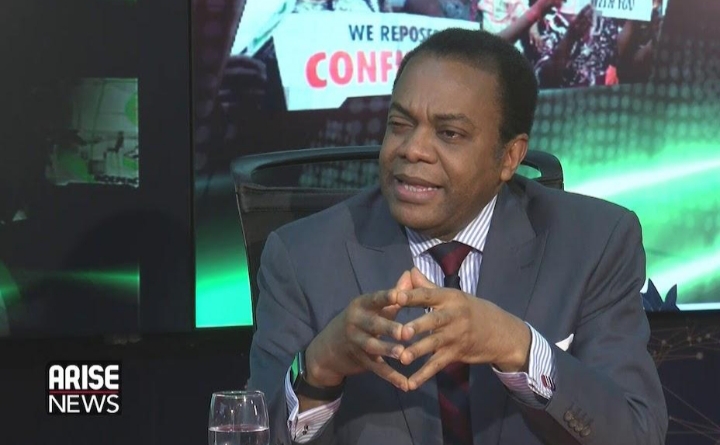

Former Cross River State Governor and presidential candidate of the People's Redemption Party (PRP), Donald Duke, has questioned the Federal Government's decision to proceed with the multi-billion-naira Lagos-Calabar Coastal Highway, arguing that Nigeria should instead channel scarce public funds into healthcare, education and electricity.
Speaking during an interview on Arise News on Tuesday, Duke said the country could not afford the scale of the coastal road project at a time of mounting economic pressures and competing social needs.
His comments come as the Federal Government continues construction of the 700-kilometre highway, one of President Bola Tinubu's flagship infrastructure projects.
The project has generated debate over its cost, environmental impact, procurement process and economic value.
"The country cannot afford it. You cannot build a road on the coast from Lagos to Calabar," Duke said.
Existing Road Raises Questions
Duke argued that Nigeria already has a road linking Lagos and Calabar, suggesting government resources would be better spent rehabilitating the existing route rather than constructing an entirely new coastal highway.
"I've driven from Lagos to Calabar several times. If the road is poor, fix it."
He also questioned whether the project would extend beyond parts of Ogun State as originally planned and suggested that sections of the proposed alignment appeared linked to coastal land reclamation.
"I think the road serves other purposes because I drove once on the road and all I saw on the right flank going towards Agbe was land reclamation and all that."
Duke did not provide evidence for that assertion.
The Federal Government has consistently maintained that the project is intended to improve transport connectivity, boost tourism, reduce travel time and stimulate economic activities along Nigeria's coastline.
Concerns Over Cost
One of Duke's central arguments was that Nigeria faces difficult spending choices and should focus on sectors that directly affect citizens' welfare.
"The amount going to be spent on that road could be better spent providing electricity, could be better spent upgrading your healthcare system."
He added that education also requires greater public investment.
"Not to talk of the schooling system that is hardly funded. So you prioritise, focus on your priorities."
Nigeria continues to grapple with persistent electricity shortages, underfunded public hospitals and learning deficits despite annual budget allocations to those sectors.
Analysts have long argued that limited government revenues force policymakers to balance infrastructure investment against social spending.
Healthcare Funding Claim Requires Context
Duke said health received "barely 36 million" in released capital funding last year, attributing the figure to the health minister.
Nigeria's federal health budgets have generally run into hundreds of billions of naira annually.
It remains unclear whether Duke was referring to a specific capital release, a budget component or another funding measure.
Without additional context, the figure cannot be independently verified.
Revenue Reforms Instead of Borrowing
Beyond criticising expenditure, Duke argued that Nigeria could significantly increase government revenue through broader tax reforms and improved transaction-based taxation.
"The other ways of generating revenue could be through transactional taxes... which would quadruple what we're currently getting."
He did not explain how such reforms would generate four times current revenues or provide supporting evidence.
Tax experts have repeatedly argued that Nigeria's challenge lies less in introducing new taxes than in widening the tax base, improving compliance and reducing leakages.
The country's tax-to-GDP ratio remains among the lowest in Africa, according to international financial institutions.
Infrastructure Debate Continues
The Lagos-Calabar Coastal Highway has remained one of the Federal Government's most ambitious and controversial infrastructure projects.
Supporters argue it could stimulate trade, tourism, housing development and regional economic growth across several coastal states.
Critics, however, have raised concerns over project costs, transparency, environmental consequences, displacement of communities and whether rehabilitation of existing highways would provide greater value for money.
The government has defended the project, insisting it will deliver long-term economic benefits despite the significant upfront investment.
Why It Matters
Duke's intervention adds to growing scrutiny over how Nigeria allocates limited public resources during a period of high inflation, rising public debt and widespread economic hardship.
The broader question is not only whether the coastal highway should proceed, but how governments should balance major infrastructure ambitions with urgent investments in healthcare, education, electricity and other public services.
As construction continues, debate is likely to focus on whether the project delivers the economic returns promised by the Federal Government and whether its costs remain justified amid competing national priorities.