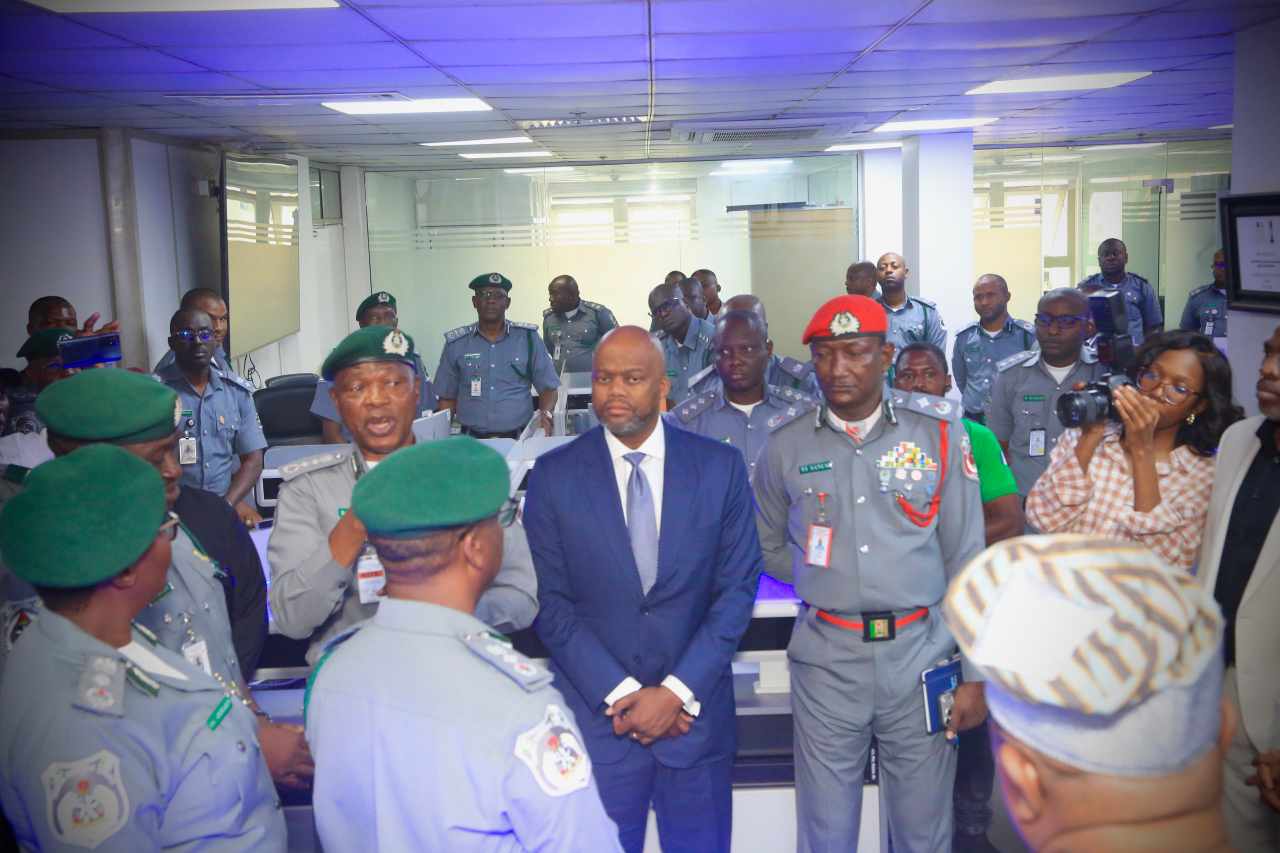

The Senate Committee on Customs and Excise has backed the Nigeria Customs Service's technology-led reforms after lawmakers inspected its modernization projects, but the real test will be whether the investment reduces delays for traders while improving revenue collection.
The committee's chairman, Senator Isah Jibrin, said the visit gave lawmakers a clearer picture of how money appropriated to the Service was being spent.
The lawmakers made the assessment on Thursday, 6 August, during a two-day retreat with the Nigeria Customs Service (NCS) in Abuja focused on legislative oversight and a review of the Nigeria Customs Service Act.
Members of the committee also toured the Customs House in Maitama, where officials demonstrated digital systems, infrastructure and other modernization initiatives.
“We have heard about these reforms from afar, but today we have seen them ourselves.
The transformation taking place in the NCS is remarkable, particularly in the deployment of technology, modern infrastructure and operational innovations that are repositioning the Service for greater efficiency.”
Senator Jibrin said the inspection would help lawmakers scrutinise future requests for Customs capital expenditure.
“When the NCS comes before the National Assembly seeking approval for capital expenditure, we now have a clearer understanding of what those resources are being used for.
The reforms we have seen today clearly demonstrate that government funds are being invested responsibly to strengthen Customs operations, improve trade facilitation and enhance national revenue.”
However, the Senate's endorsement is not, by itself, evidence that the reforms have solved the problems facing importers and exporters.
What is Customs changing?
Comptroller-General of Customs Adewale Adeniyi said the Service is expanding the use of technology beyond cargo processing to personnel management, enforcement and surveillance.
“Technology helps us to work faster and more efficiently. We started by deploying digital solutions into personnel administration, postings, staff matters and pensions before extending them to our core operational responsibilities, and we will continue until virtually every aspect of Customs operations is technology-driven.”
The Service says it is also using geospatial intelligence to plan patrol routes and checkpoints, while virtual shooting simulators are being introduced for enforcement training.
“We are deploying geospatial intelligence to map our patrol routes and position our checkpoints more efficiently across the country. Combined with modern training facilities such as our virtual shooting range, these innovations will significantly strengthen our enforcement capabilities.”
The broader programme includes the Authorised Economic Operator (AEO) scheme, advance rulings, Time Release Studies and the use of cargo scanners.
They form part of the wider customs modernization framework and are supported by provisions of the Nigeria Customs Service Act 2023, which provides for measures including electronic systems, risk management, advance rulings and non-intrusive inspection.
Adeniyi said the Service's task was to turn those legal provisions into operational changes.
“The law requires us to modernise our operations. Initiatives such as the Authorised Economic Operator Programme, Advance Ruling, Time Release Study, scanner deployment and other technology-driven reforms are all backed by the provisions of the Nigeria Customs Service Act. Our responsibility is to continue implementing them to support the Federal Government reform agenda.”
Has the reform produced results?
There is evidence of improved revenue collection.
Customs reported collecting about ₦7.28 trillion in 2025, exceeding its approved target of about ₦6.58 trillion by roughly 10%. The Service has projected revenue of about ₦11.07 trillion for 2026.
Customs also reported that 51 companies participating in its AEO programme recorded a combined revenue increase from ₦1.222 trillion before certification to ₦1.585 trillion after certification.
The AEO scheme is intended to reward compliant traders with simplified customs procedures. In principle, that can allow Customs to concentrate enforcement resources on higher-risk shipments while allowing lower-risk cargo to move more quickly.
Why the reforms matter
For importers and exporters, faster and more predictable clearance could reduce storage, demurrage and other costs and make Nigerian businesses more competitive.
For government, more effective digital controls could improve compliance and reduce revenue leakage while allowing Customs to focus enforcement on suspicious shipments.
For consumers, the effect is less direct but potentially significant. If border procedures become faster and cheaper, businesses may face lower logistics costs. Whether those savings are passed on to consumers, however, depends on wider market conditions.
There are also risks.
Technology does not automatically eliminate corruption or inefficiency. Poorly integrated systems, unreliable infrastructure, weak oversight or excessive dependence on manual intervention can continue to undermine reform.
The history of Customs modernization in Nigeria also shows why implementation matters as much as policy. The Service has invested in scanning and digital clearance systems before, yet some equipment and systems have not been used consistently enough to eliminate manual processes.
A wider government push
The Customs reforms are part of a broader attempt by the Federal Government to make trade administration more digital.
Nigeria began rolling out the first phase of its National Single Window in March 2026, designed to allow importers and exporters to process trade documentation through a central electronic platform and reduce bureaucratic delays.
That means Customs' modernization cannot be viewed in isolation.
If different government agencies continue operating disconnected systems, digitising Customs alone may have limited impact. But if Customs, ports, regulators and other border agencies eventually operate through integrated systems, the potential effect on clearance times could be much greater.
The next stage, therefore, is less about announcing new technology and more about demonstrating measurable results.
For the Senate, that means following the money it approves for Customs and checking whether promised systems are functional.
For Customs, it means showing that digital investment produces faster clearance, stronger enforcement, better compliance and sustained revenue without imposing unnecessary costs on legitimate trade.
The committee's endorsement may strengthen Adeniyi's modernization agenda, but the harder test will be whether traders and the wider economy can see the difference at Nigeria's borders.