
The fight against illicit drugs in Nigeria will require sustained efforts across generations because traffickers continue to adapt after major operations, the chairman of the National Drug Law Enforcement Agency (NDLEA), Mohamed Buba Marwa, has said.
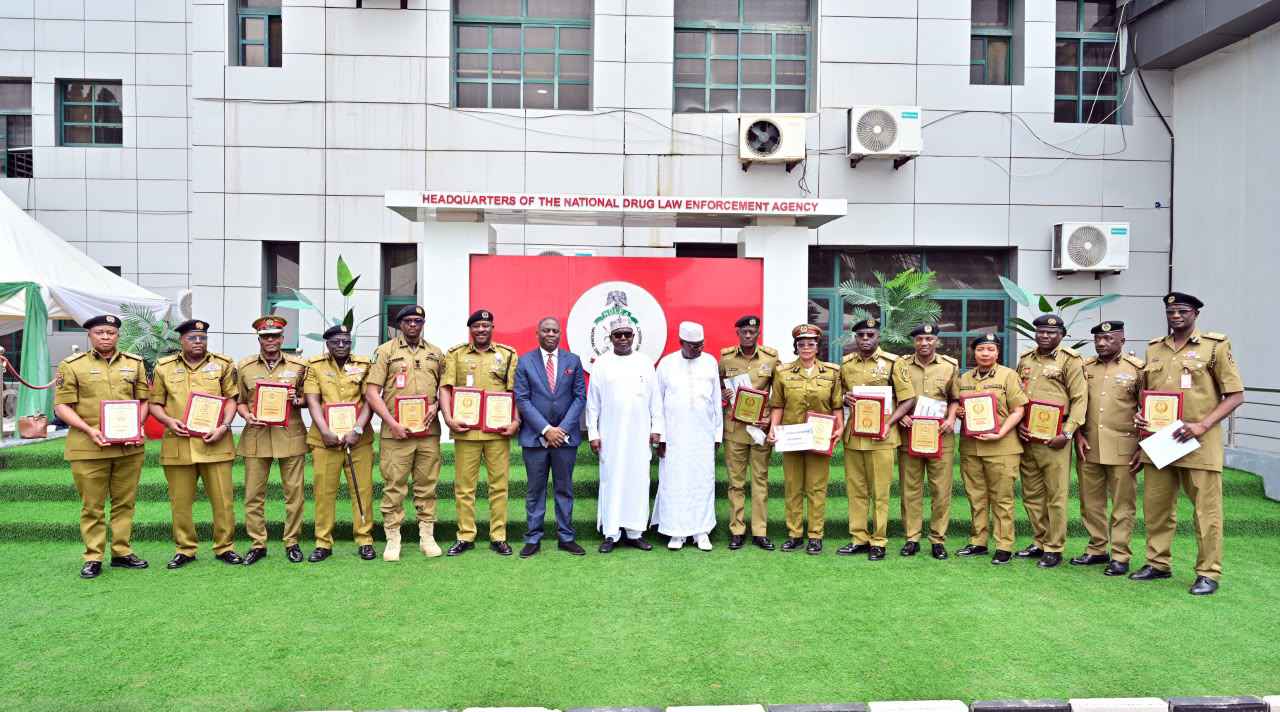
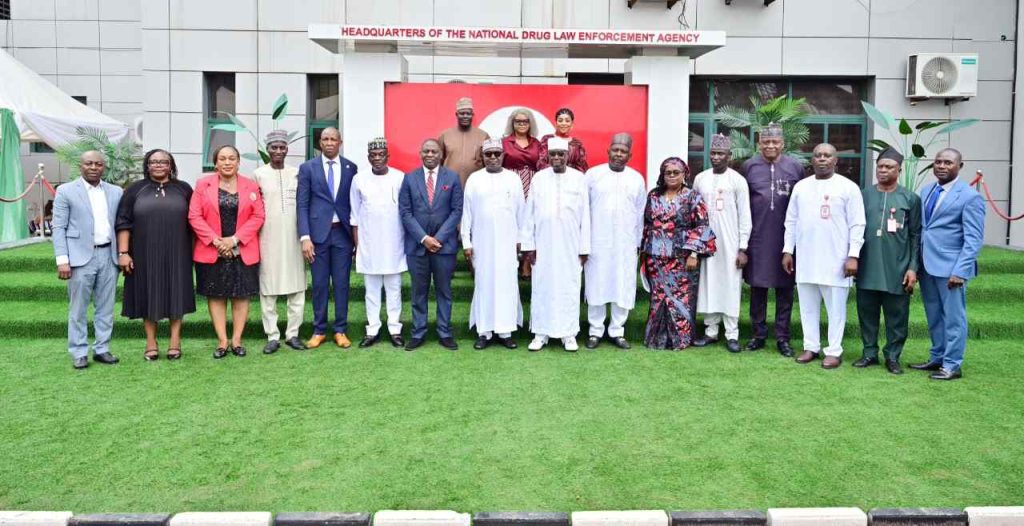
Marwa made the assessment on Thursday in Abuja as the agency recognised 274 officers and other personnel for their performance, alongside 18 commands and 19 civil society and media organisations.
He said the awards should not be seen as an indication that the drug problem was being brought under control, but as recognition of people contributing to a much longer campaign.
“The war against illicit drugs is not a campaign with an end date.
It is a generational responsibility.
For every cartel we dismantle, intelligence tells us another will attempt to rise.
For every corridor we shut down, traffickers will search for another route.”
Why the drug fight remains difficult
Nigeria has spent years battling the trafficking and misuse of illicit drugs, with the NDLEA responsible for enforcement, interdiction and related prevention efforts.
Marwa said drug networks respond to enforcement pressure by changing routes and methods.
He cited the dismantling of the Amadi Simon drug cartel, operations against two Nigerian-Mexican methamphetamine networks operating in forests in Ogun and Oyo states, and action against a tramadol trafficking network using the Togo-Benin Republic-Nigeria corridor.
“These were not simple raids. They were the product of patient intelligence-gathering, cross-border cooperation, and officers willing to go where the criminals believed no one would follow,” he said.
RELATED:Italy-based Businessman Arrested at Enugu Airport With 1.51kg Cocaine
Enforcement alone cannot solve the problem
Marwa also argued that arrests and seizures cannot by themselves address drug dependence and substance abuse.
He said non-governmental organisations and the media play an important role by working with communities and reporting on trafficking, rehabilitation and the experiences of families affected by addiction.
“The fight against drug trafficking and substance abuse was never going to be won by enforcement alone. It is won in the communities where NGOs quietly walk young people back from the edge of addiction.”
He added: “It is won in the newsrooms where journalists chose to tell the difficult stories, the stories of trafficking routes, of rehabilitation, of families rebuilding, even when those stories were not the easiest to tell.”
The approach reflects a wider drug-control challenge: reducing supply without neglecting prevention, treatment and rehabilitation for people who use drugs.
What the awards mean
The 12th Chairman/Chief Executive Officer's Commendations and Awards ceremony recognised 274 personnel, 18 commands and 19 NGOs and media organisations.
Marwa said the list did not represent every organisation or individual contributing to the campaign.
He described the ceremony as “the beginning of a tradition, not a closed chapter”, saying future editions would recognise others involved in anti-drug advocacy.
For NDLEA personnel, he said the recipients should provide a benchmark for others rather than a limit to what they could achieve.
He also urged civil society organisations and media outlets to treat the recognition as encouragement to continue their work.
The bigger question: what happens beyond arrests?
The effectiveness of Nigeria's anti-drug strategy cannot be measured only by the number of arrests, seizures or dismantled trafficking networks.
The longer-term test is whether fewer people become dependent on drugs, whether those affected can access treatment and rehabilitation, and whether trafficking networks can be prevented from rebuilding.
This is particularly important because disrupting one route can push traffickers towards another, rather than eliminate the underlying market.
For communities, the issue therefore extends beyond policing.
Families affected by substance abuse, young people at risk of addiction, health workers, schools and community organisations all have a stake in how the government combines enforcement with prevention and treatment.
What happens next?
Marwa has called on NDLEA officers to remain resilient and on civil society and media partners to continue supporting the campaign.
The agency will now face the more difficult task of demonstrating that major enforcement operations translate into sustained disruption of trafficking networks and better outcomes for people affected by drug use.
For Nigeria, the measure of success will ultimately be whether the country's drug-control efforts can reduce both the supply of illicit substances and the harm they cause over time.