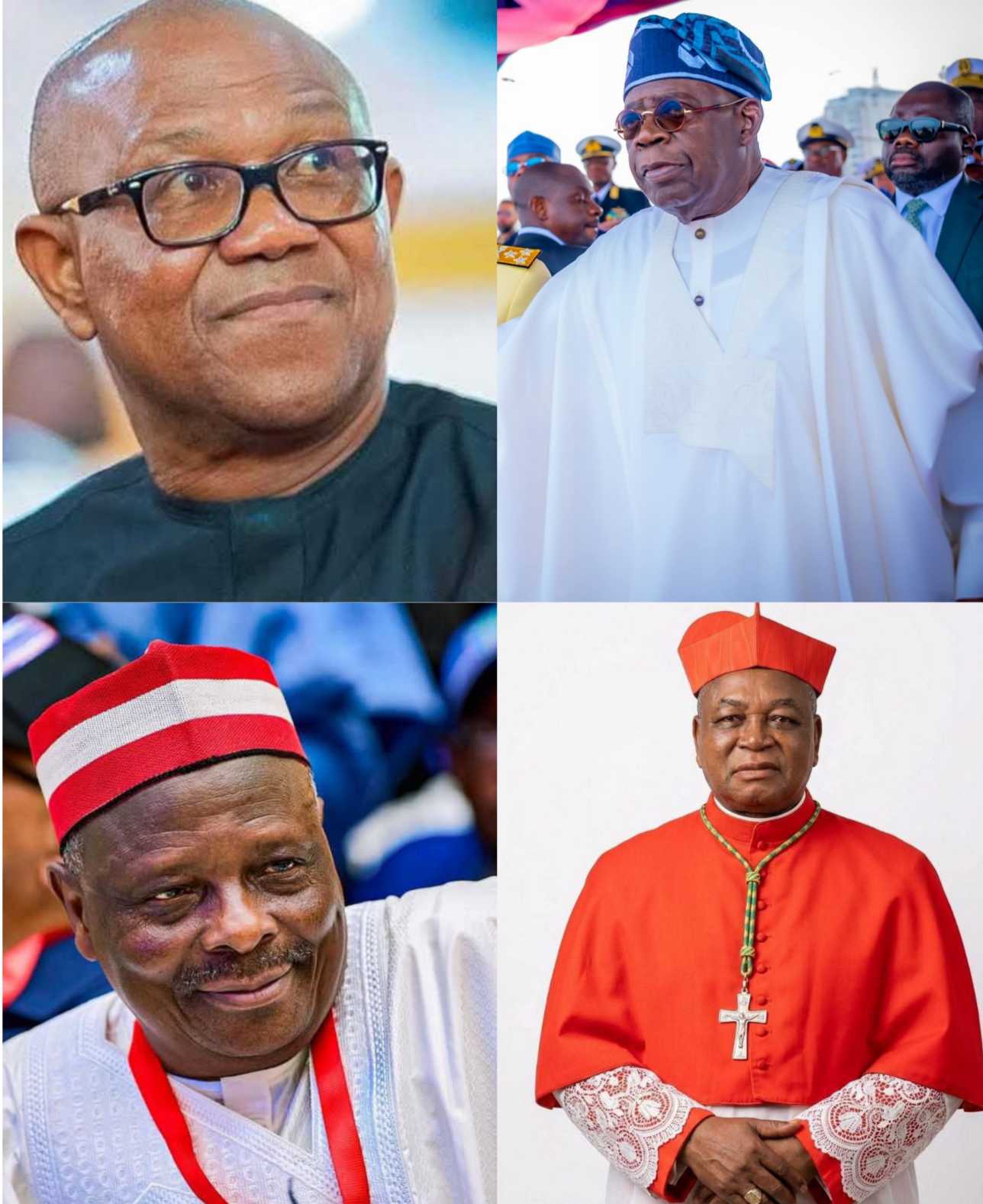

Nigeria's political opposition has rallied behind the Catholic Bishops' Conference of Nigeria (CBCN) after the country's Catholic bishops warned of worsening economic hardship and insecurity, intensifying a national debate over whether the Federal Government is responding to criticism with dialogue or confrontation.
Former Labour Party presidential candidate Peter Obi and former Kano State Governor Rabiu Musa Kwankwaso have separately defended the bishops' right to speak on national issues, arguing that their concerns reflect the daily experiences of millions of Nigerians rather than partisan politics.
The controversy follows public criticism by the Catholic Bishops' Conference of Nigeria>, which expressed concern over the country's rising cost of living, persistent insecurity and declining public confidence. Some supporters and aides of President Bola Ahmed Tinubu subsequently criticised the bishops' position, prompting fresh debate about freedom of expression and democratic accountability.
Why the debate matters
The exchange comes as many Nigerians continue to grapple with the effects of sweeping economic reforms introduced by the Tinubu administration, including the removal of petrol subsidies and exchange-rate reforms.
While the government says the measures are necessary to stabilise the economy over the long term, many households continue to face high food prices, increased transport costs and reduced purchasing power.
The bishops' intervention has therefore resonated beyond religious circles, raising broader questions about whether criticism from respected institutions is being adequately addressed.
Obi: Government should answer criticism with solutions
In a lengthy statement published on his official X account, Peter Obi accused the government of becoming increasingly intolerant of dissent.
"The Catholic Church has never functioned as an opposition party in Nigeria."
Obi argued that the Catholic Church has consistently spoken on national issues under both military and civilian governments, praising administrations when appropriate while criticising policies it considered harmful.
He noted that other religious organisations—including the Christian Association of Nigeria (CAN), the Nigerian Supreme Council for Islamic Affairs (NSCIA), Jama'atu Nasril Islam (JNI) and the Supreme Council for Shari'ah in Nigeria—have similarly raised concerns about hardship and insecurity over the years.
According to Obi: "The bishops merely expressed what millions of Nigerians experience daily: insecurity has worsened, poverty is deepening, inflation is crippling families, businesses are struggling, and hope is fading."
He also condemned personal attacks directed at former Archbishop of Abuja John Cardinal Onaiyekan, describing them as harmful to democratic discourse.
"The CBCN did not insult the President and can never do so... It gave voice to the suffering of Nigerians. The proper response was to thoughtfully address the issues raised, not attack those who raised them."
Obi warned that when governments discourage honest criticism, leaders risk becoming isolated from the realities facing citizens.
"When respected figures like Cardinal Onaiyekan are vilified for speaking the truth, the message sent to citizens is that silence is safer than honesty. No democracy can flourish under such a culture."
Kwankwaso praises bishops' "courage and patriotism"
Rabiu Musa Kwankwaso also threw his weight behind the bishops, describing their intervention as an act of national responsibility rather than political opposition.
"I commend the Catholic Bishops' Conference of Nigeria (CBCN) for demonstrating courage and patriotism by drawing attention to the realities confronting our nation."
Kwankwaso said the bishops' concerns over the rising cost of living, worsening insecurity, declining public confidence and economic hardship reflected the experiences of ordinary Nigerians.
"Their concerns regarding the rising cost of living, worsening insecurity, declining public confidence, and the hardship faced by millions of Nigerians are neither partisan nor isolated; they reflect the daily experiences of ordinary citizens across every region of our country."
He argued that despite Nigeria's abundant human and natural resources, millions continue to struggle with poverty, unemployment, poor healthcare, inadequate education and insecurity.
"These challenges demand urgent, sincere, and people-centred responses from those entrusted with leadership."
The former presidential candidate urged Nigerians to continue engaging governments constructively while advocating accountability and better governance.
"It is through such collective commitment and responsible leadership that we can build a more peaceful, united, and prosperous Nigeria."
What do the facts show?
Nigeria continues to experience significant economic pressure despite government assurances that reforms are beginning to yield results.
Data from the National Bureau of Statistics has shown inflation easing from previous highs in recent months, although food inflation remains elevated and many households continue to report declining purchasing power.
Security also remains a major concern. While security agencies have announced several successful operations against kidnappers and armed groups, attacks, kidnappings and violent incidents continue to affect communities in different parts of the country.
The Federal Government maintains that ongoing security operations and economic reforms are designed to improve conditions over time, although officials acknowledge that many Nigerians are still facing hardship.
Religious organisations have criticised previous administrations
The Catholic Bishops' Conference has a long history of commenting on governance issues in Nigeria.
The organisation criticised military governments as well as the civilian administrations of former Presidents Olusegun Obasanjo, Umaru Musa Yar'Adua, Goodluck Jonathan and Muhammadu Buhari over issues ranging from corruption and insecurity to elections and economic management.
Similarly, Muslim organisations including JNI and NSCIA have frequently spoken out on national challenges, making criticism of government a longstanding feature of Nigeria's democratic and religious landscape.
Political analysts say the current controversy therefore reflects a broader debate over how governments should respond to public criticism rather than an entirely new phenomenon.
Presidency defends reforms
President Tinubu has repeatedly defended his administration's policies, arguing that difficult economic decisions inherited from previous administrations were necessary to place Nigeria on a path towards sustainable growth.
Government officials have pointed to improvements in some macroeconomic indicators, increased investor interest and fiscal reforms as evidence that the policies are beginning to take effect.
However, opposition politicians, labour unions and civil society organisations argue that the benefits have yet to translate into meaningful relief for many Nigerians.