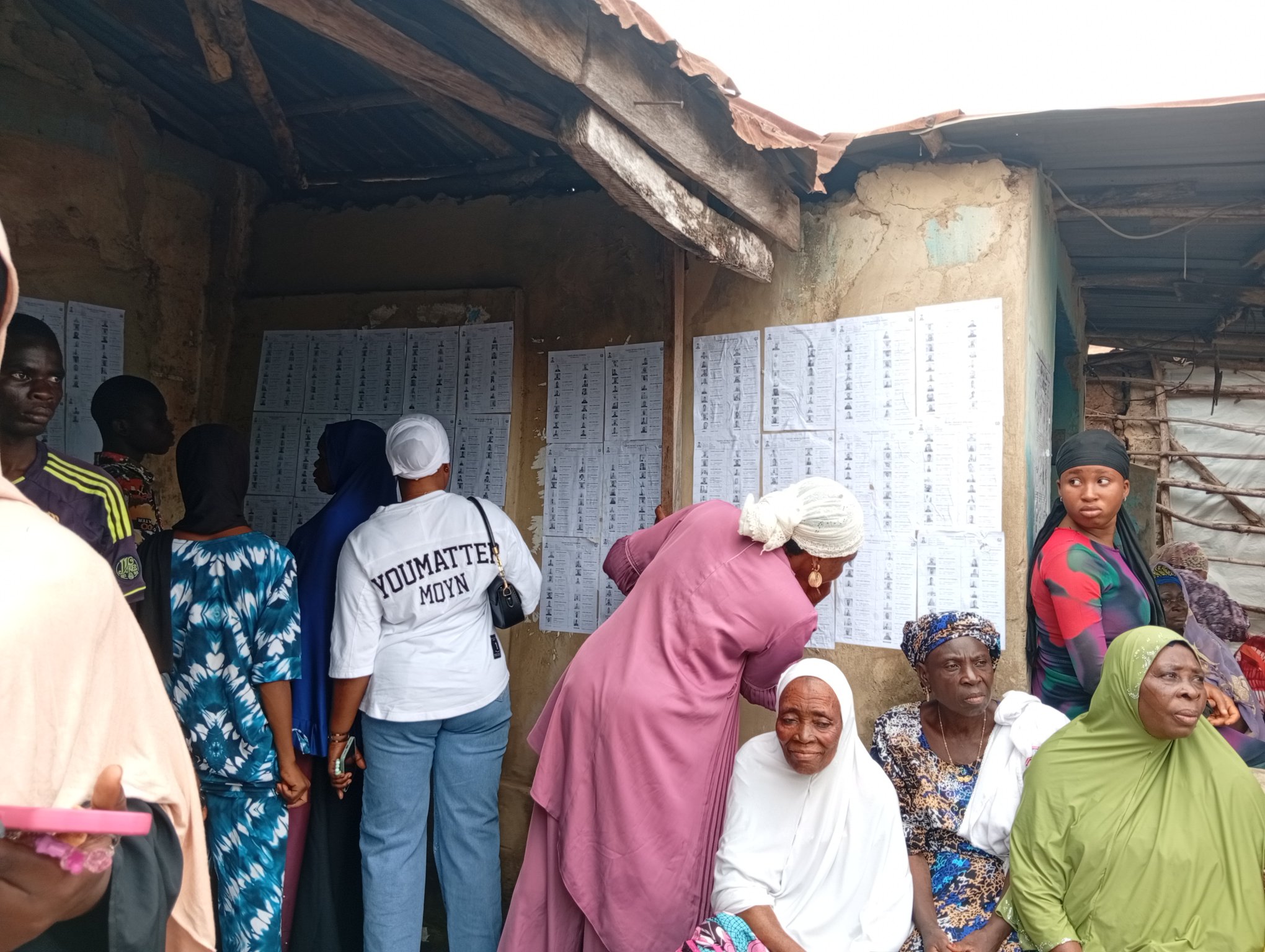

.....Osun SSG Igbalaye Teslim says the election is largely peaceful but alleges vote-buying and intimidation in some areas, while voters in other polling units report an orderly process.
The Osun State Secretary to the State Government, Hon. Igbalaye Teslim, has raised concerns over alleged vote-buying, intimidation and delays with the biometric voter accreditation system as voting continues in Saturday's governorship election.
Teslim said the election was generally peaceful but claimed he had received reports of large-scale vote-buying in parts of the state, particularly in some wards in the Ilesa area.
He also alleged that security personnel had failed to act on some of the reported incidents.
“The process is going on fine. Only that in some places, there are some glitches in the BVAS. BVAS is very slow, and people are complaining.”
The SSG's comments are significant because they come from a senior official in the Osun State Government.
SSG alleges vote-buying
Teslim said reports reaching him indicated that vote-buying was taking place in several polling units.
“From the report I'm getting, from various places, there is a large number of vote buying that's going on in some units.”
He alleged that some of the activity involved supporters of the APC.
“From the report I'm getting now, a lot of vote buying is going on from the APC people.”
Teslim said he had contacted security agencies and expected them to intervene.
“I've called some security agencies to help us stop this madness that is going on. And I'm expecting their response.”
He urged security agencies to take action, arguing that vote-buying undermines democratic participation.
“We believe that vote buying will not help our democracy, it will not make our democracy thrive.”
Intimidation reported in some areas
Teslim also said he had received reports of intimidation in some parts of the state.
He specifically mentioned the Freedom Park and Railway areas, where he said a neighbour was allegedly threatening voters.
“There is a neighbour who is threatening people that they should not vote.”
Teslim said he contacted the Department of State Services, police and military authorities over the allegation.
“And I called the DSS and the police and the soldiers. I think they are there now. And I think they are working on this."
Teslim said the overall situation remained relatively calm despite the reports.
“But, by and large, as of now, as I'm talking to you, it's still fair.”
BVAS delays reported
The SSG also raised concerns about the speed of the Bimodal Voter Accreditation System (BVAS), which INEC uses to verify voters before they are allowed to cast their ballots.
Teslim said he experienced delays himself when voting began.
“Initially, when we started this morning, it happened to me too. When we started, the process was so slow.”
He said the system had improved in some locations but remained problematic in others.
“But I think it has picked up now. From what I gathered, some have picked up, some have not.”
He rated INEC's preparedness as “average” and said election officials should address outstanding problems.
“Well, I've told you already that this is a little bit average. But, I think all those areas that there are some places, they should be able to address it.”
SSG rejects allegation of manipulation
Teslim also dismissed suggestions that the Accord Party, which he supports, could manipulate the election.
When asked about allegations that the party was attempting to manipulate the process, he questioned why a popular candidate would need to do so.
“Somebody that is popular will manipulate? I don't think so.”
He said the party was confident in its electoral prospects.
“We believe in ourselves and we know we can win. So, what are we manipulating? We don't need any person to manipulate.”
He added: “We believe they will vote for us and our work will speak for us.”
He refuses to pre-commit to accepting result
Teslim was also asked whether he would accept the election result regardless of who wins.
He declined to make such a commitment at that stage, saying he needed information from across the state before judging the process.
“Well, I can't accept this for now. Because I need to get information.”
He said his assessment could not be based solely on what happened in his local government.
“I can't use my election local government to judge what is going on. I need to call on all of my local governments.”
He nevertheless said he hoped the election would end in a credible outcome.
“But, my feeling is that at the end of the day, I really hope that we come out proud.”
At Batetu Compound, voters report orderly process
At Polling Unit 6, Batetu Compound, Hon. Tunde Salami, Senior Special Assistant on Media and ICT to Governor Ademola Adeleke, gave a more positive assessment of the voting process.

“So far so good here in my community, everything is going fine.”
Salami, however, also reported difficulties with the accreditation of some voters.
He said some people had been asked to wait and return later.
He estimated the process in his area at about 70% to 75% when he spoke to Olokuns Media Network.“
INEC is working 70% to 75%.”Salami said voting started at about 8:30am.
Former Amotekun commander raises security concerns
Also at Batetu Compound was Brigadier General Bashir Adewinmbi (rtd.), a former Corps Commander of the Osun State Amotekun Corps.
Adewinmbi said security fears had affected some people's willingness to return to Osun to vote.

“Initially, there was this voters' apathy due to threats of shooting. I'm sure there would have been more than this.”
He said some registered voters who wanted to return home were afraid because of recent killings.
“But people that registered here and wanted to come home, they were afraid because of what happened recently. Killings in some parts of the state.”
Adewinmbi also alleged that political actors had used violence and firearms to create favourable conditions for themselves.
He urged voters to reject intimidation and allow the ballot to determine the winner.
“The election is not by violence, or by intimidation, or by harassment. It's the vote that we count.”
Adewinmbi also expressed confidence in his preferred candidate.
“By the grace of God, our governor, Ambo, is going to be victorious.”
Elderly voter praises arrangements at Aishu
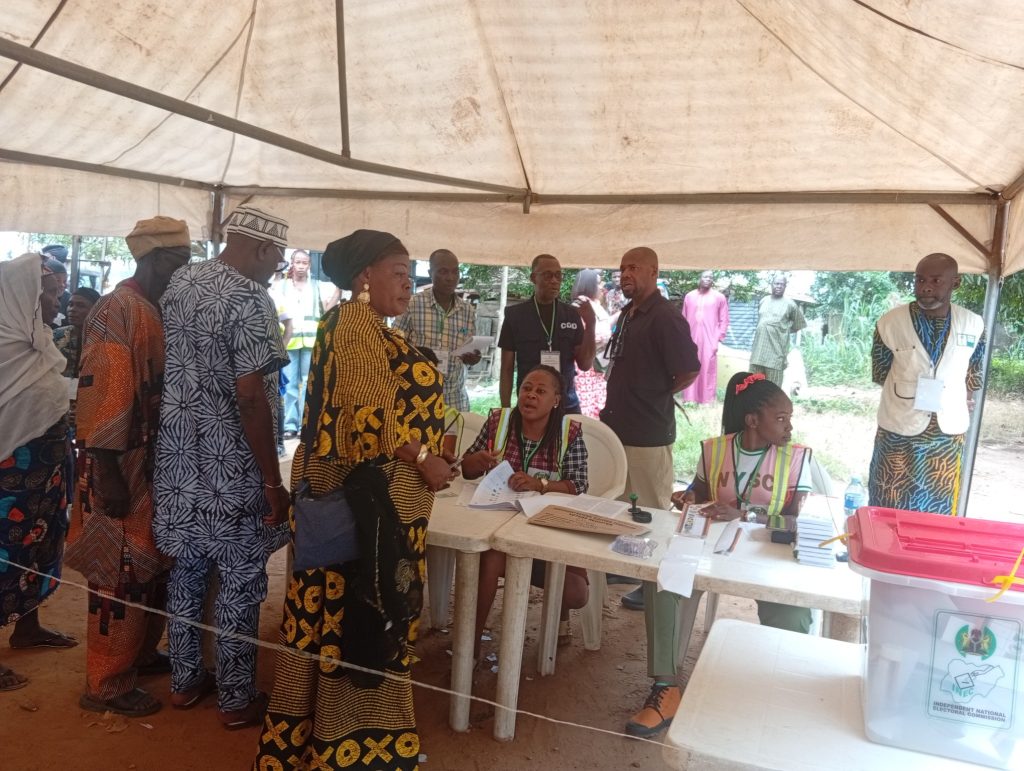
At Aishu Polling Unit 1, Ward 5, elderly voter Akande Adeniran described the voting process as orderly.
He praised the arrangements made for elderly voters and described the organisation at the polling unit as satisfactory.
“The arrangement has been very fine.”
Adeniran said officials checked voters' names, captured their photographs and issued ballot papers before directing them to the voting area.
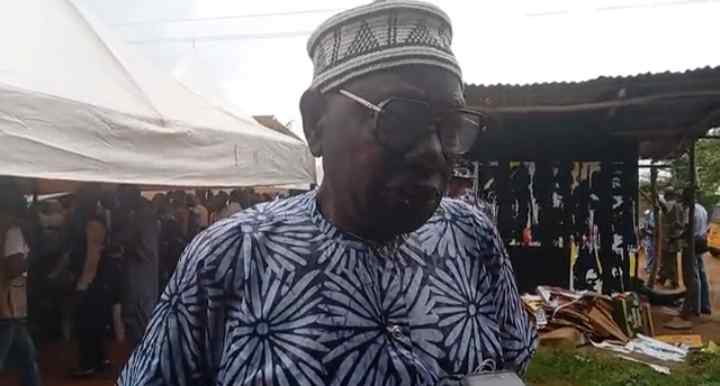
He said he had not witnessed serious violence at the polling unit.
“Not, not really.”
He said some voters appeared anxious to complete the exercise, but added that security personnel and the presiding officer were able to manage the situation.
Adeniran also pointed to what he considered a strong turnout.“
You yourself can see. The way people turn out for this session too.”
He said voters were determined to exercise their civic rights despite fears of intimidation.
“We are here to perform our normal civil duty.”
Security remains a major test
Security has been a central concern throughout the election period.
The Nigeria Police Force has barred Amotekun, vigilante groups, hunters and other non-state security organisations from participating in election-security operations.
The police said only constitutionally recognised security agencies should perform election-related security duties.
The restriction is particularly relevant to Adewinmbi because of his former leadership role in the Osun Amotekun Corps.
The police have also imposed movement restrictions across Osun as part of measures to secure the election.
Meanwhile, INEC has been deploying personnel and materials to thousands of polling units across the state.
Early reports indicate that voting has generally started in most polling units, although the experience has varied between locations.
Why the allegations matter
Vote-buying is not simply a dispute between political parties.
It can affect the ability of voters to make choices freely and undermine confidence in election results.
Similarly, intimidation can prevent eligible voters from reaching polling units or discourage them from supporting candidates of their choice.
BVAS delays present a different problem. If accreditation takes too long, voters may face frustration, queues and the risk of being unable to vote within the available polling period.
For INEC, the challenge is therefore to resolve technical problems quickly and ensure that eligible voters are not unfairly disenfranchised.
For security agencies, allegations of vote-buying and intimidation require investigation rather than political argument.
What happens next?
The immediate priority is for voting to continue without intimidation and for any technical or accreditation problems to be addressed.
After polling closes, ballots will be counted at polling units before results move through the collation process.
Claims of vote-buying, intimidation or other irregularities will need to be supported by evidence from polling units, accredited observers, election officials and security agencies.
The final assessment of the election will therefore depend less on the competing claims made by political actors and more on what can be independently established from the voting, counting and collation process.
For now, voters remain at the centre of the process. Whether their ballots translate into a credible result will become clearer as counting begins across Osun.