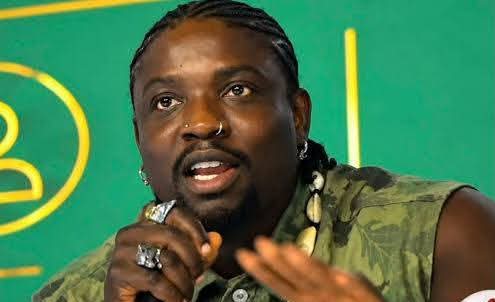

Nigeria Police Force asks social activist Martins Vincent Otse, known as VeryDarkMan, to provide evidence for allegations that some officers at highway checkpoints pass travellers’ information to kidnappers.
The dispute comes as Nigeria’s security chiefs begin work on a five-year national security strategy.
The Force said the allegation was serious and could damage public confidence in the police, but maintained that no evidence had yet been provided to support it.
Otse made the allegation during a discussion on insecurity at the Nigerian Bar Association’s annual conference in Port Harcourt.
He alleged that some officers at checkpoints identify travellers who appear capable of paying ransom and pass information about them to criminal groups.
The allegation matters because police checkpoints are designed to deter crime and protect travellers, while kidnapping remains a major security concern across Nigeria.
The central question is now whether there is evidence linking specific police officers to kidnappers and whether such evidence can be independently verified.
Police demand evidence
In a statement issued on Thursday, Force Public Relations Officer CSP Ani Iniedu said the police took allegations concerning the conduct of its personnel seriously.
But the Force rejected what it described as a broad and unsubstantiated accusation against its officers.
“The Nigeria Police Force firmly rejects these allegations as unsubstantiated and unfairly damaging to an institution entrusted with the protection of millions of Nigerians.”
The Force said officers deployed to checkpoints were there to prevent crime, detect criminal activity and protect citizens.
It also pointed to attacks on police officers and formations by kidnappers, terrorists and other violent criminals.
“Indeed, these same police officers routinely confront the very criminal elements alleged to be receiving such information. Police personnel have been ambushed, attacked and killed, while police stations, formations and operational assets have equally been targeted by terrorists, kidnappers and other violent criminals.”
But evidence that police officers are also victims or combatants in the fight against criminals would not, on its own, disprove allegations of individual collusion.
That distinction is important because misconduct by individual officers would need to be investigated separately from claims about the police institution as a whole.
VeryDarkMan says he will present evidence in court
Otse has responded to the police demand by saying he is prepared to face the authorities.
However, he said he would not hand his evidence directly to the police because he wanted the matter tested in court.
“I’m not going to be giving the police my evidence. Why would I do that? I would be charged to court, and I would turn down the evidence in court.”
The police have not announced any criminal charge against Otse over the allegations.
This leaves the dispute at an important point.
If evidence is eventually produced, investigators would need to establish whether it is authentic, identify the officers allegedly involved and determine whether they committed criminal or disciplinary offences.
If no credible evidence emerges, questions will remain about the basis for an allegation capable of undermining public confidence in the security services.
What happened at the NBA conference?
Otse made the allegations during a discussion on insecurity at the NBA conference in Port Harcourt.
The discussion focused on Nigeria’s security challenges and the experiences of citizens dealing with kidnapping and other forms of violent crime.
Police officials also participated in the discussions.
The police have argued that criminals can observe security checkpoints and exploit information they obtain independently.
That explanation does not establish whether any police officer has ever unlawfully shared information with criminal groups.
The difference can only be settled through evidence and investigation.
Police defend officers against blanket accusations
The Force also rejected what it considered a generations about hundreds of thousands of police officers.
It said many officers work in difficult and dangerous conditions and routinely confront the same criminal groups accused of receiving information from checkpoints.
“Sweeping public accusations that paint the entire Force as complicit in the crimes it exists to prevent are deeply demoralizing to these officers and unfair to the majority who serve with integrity.”
However, the police also acknowledged that individual officers could compromise their duties.
“Where individual officers are found to have compromised their duty, they will face the full weight of internal discipline and the law.”
That commitment will be important if specific evidence emerges.
A credible investigation would need to establish not only whether information was leaked, but who leaked it, what information was shared, who received it and whether it contributed to an abduction.
Nigeria begins work on five-year security plan

The controversy comes at a significant time for Nigeria’s wider security architecture.
On 26 August, Inspector-General of Police Olatunji Rilwan Disu joined the Chief of Defence Staff and the Service Chiefs at the inauguration of a committee tasked with preparing a National Threat Assessment and a Five-Year Strategic Defence and Security Operations Plan.
The inauguration took place at the Office of the Secretary to the Government of the Federation, Senator George Akume, in Abuja.
The committee is expected to assess emerging and evolving threats and develop a coordinated five-year framework for defence and security operations.
The initiative brings together the country's senior security leadership at a time when Nigeria faces multiple security challenges, including kidnapping, terrorism, banditry and other forms of organised violence.
It also places greater importance on intelligence-sharing and coordination between security agencies.For the strategy to work, security agencies will need reliable intelligence and effective systems for protecting sensitive information.
That makes allegations of information leaking from checkpoints particularly significant.
If such allegations are proven, they could point to weaknesses in intelligence protection, supervision and internal accountability.
If they are not proven, unchecked claims could damage public confidence in security personnel who are expected to protect travellers.
Also Read: Eze Attacks Wike Over APC Campaign Role, Osun Election Comments
Why this matters to Nigerians
For people travelling by road, the issue is not simply a dispute between a social media activist and the police.
Travellers need to know that information they provide to security personnel will be used for their protection rather than expose them to greater risk.
The police also need public cooperation to prevent and investigate crimes.
A loss of trust at checkpoints could make people less willing to provide information or cooperate with officers.
At the same time, dismissing credible allegations without proper investigation could have the same effect.
The challenge for the police is therefore to defend its officers while demonstrating that credible complaints will receive independent and transparent scrutiny.
What happens next?
The Nigeria Police Force has formally invited Otse to submit evidence supporting his allegations.
“Any such information will be treated with urgency and investigated thoroughly.”
The Force also urged members of the public with credible evidence of police misconduct to report it through appropriate channels.
“We will continue to investigate all credible allegations of misconduct, however they arise, and we will not hesitate to act where wrongdoing is established.”
The wider five-year security planning process will also test whether Nigeria's security agencies can turn intelligence and inter-agency cooperation into more effective protection for citizens.
For now, neither the police rejection nor VeryDarkMan's allegation establishes the truth.
The decisive next step will be evidence: whether it is produced, whether it can be independently verified and whether authorities investigate any specific officers identified.