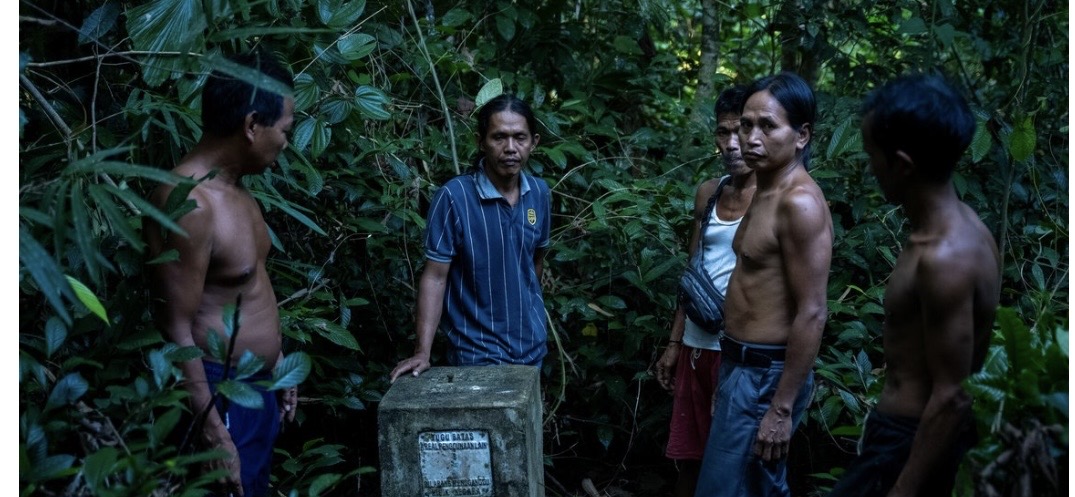

At least 124 people defending land and the environment were killed in 2025, with Latin America accounting for 85% of the documented deaths, according to a new Global Witness report.
The report, Collective Power: The Struggle for Protection for Land and Environmental Defenders, published on 16 September 2026, says land disputes were linked to more than half of the killings recorded during the year. (Global Witness)
The latest figure takes the number of killings and long-term disappearances documented by Global Witness since 2012 to 2,375.
The organisation said more than three-quarters of those killed in 2025 were small-scale farmers, Indigenous Peoples or Afro-descendant people. Indigenous Peoples accounted for 44 of the documented killings. (Global Witness)
Latin America remains the main hotpot
Latin America recorded the highest number of killings, continuing a pattern seen throughout Global Witness’s annual reporting since 2012.
Colombia recorded 39 killings, while Brazil recorded 26. Together, the two countries accounted for 52% of the global total. (AP News)
Global Witness said the concentration of attacks reflects conflicts over land, natural resources and territories, particularly where Indigenous and rural communities face pressure from extractive or other land-intensive activities.
The report also documented killings in Asia and Africa, although the number recorded outside Latin America was considerably lower.
What happened in Africa?
Global Witness documented three killings in Africa in 2025: two in Tanzania and one in the Democratic Republic of Congo.
In the DRC, journalist Fiston Wilondja Mazambi was found dead in Bukavu in August 2025 after investigating allegations of illegal gold mining involving the Rwanda-backed M23 rebel group, according to the report.
The Committee to Protect Journalists separately reported that Wilondja was found dead with a rope around his neck after his family said he had been abducted the previous day. (Committee to Protect Journalists)
Global Witness has documented 79 killings of land and environmental defenders in the DRC since 2012, the highest cumulative number it has recorded in Africa. (The Washington Post)
The organisation links the violence in eastern DRC to competition over resource-rich territories and the wider conflict affecting communities and ecosystems.
Also Read: Soludo’s Old Video Praising Peter Obi Resurfaces as Data Claims Face Scrutiny https://olokunsmedianetwork.com/2026/09/16/soludos-old-video-praising-peter-obi-resurfaces-as-data-claims-face-scrutiny/
Violence is not the only threat
The report says defenders also face criminalisation, intimidation, stigmatisation and other forms of pressure.
In Mexico, data from the Mexican environmental organisation CEMDA recorded 107 cases of criminalisation, alongside hundreds of reported cases of stigmatisation, intimidation and defamation.
Global Witness also highlighted disappearances as a continuing concern. It cited UN experts who have described the systematic nature of some attacks in Mexico as “a crime against humanity”.
The organisation’s broader methodology makes clear that its figures do not capture every attack. It works with more than 30 organisations in more than 20 countries and cross-checks cases using sources including official documents, families, civil society organisations and UN data. (Global Witness)
It also warns that its figures are probably an underestimate because cases can go unreported, particularly in conflict zones and countries where reporting abuses can expose victims and researchers to further risks. (Global Witness)
Killings have fallen, but the risk has not disappeared
The 124 killings documented for 2025 represent a substantial fall from the previous year’s figure.
Global Witness recorded 142 killings and four disappearances in 2024, compared with 196 killings in 2023. The organisation cautions against interpreting the decline as evidence that defenders are necessarily safer. (Global Witness)
It says increased criminalisation and other forms of repression can replace lethal attacks, while restrictions on reporting can make violence harder to document.
This matters because the number of documented deaths captures only the most serious attacks. A defender may face threats, legal action or intimidation without the incident appearing in the annual killing figures.
Argentina case highlights use of criminal law
The report also highlights the cases of Argentine environmental defenders Federico Soria and Mauricio Cornejo.
The two men faced criminal proceedings in Mendoza after opposing the San Jorge mining project and defending water resources, according to Front Line Defenders. The organisation said the charges relied on a provision of Argentina’s Criminal Code introduced during the 1976–1983 military dictatorship. (Front Line Defenders)
The case illustrates the wider concern raised by Global Witness: pressure on environmental defenders does not always involve physical violence.
Legal proceedings, according to the report, can also make it more difficult for communities to organise against projects they believe threaten their land or environment.
Funding cuts create another problem
Global Witness also raises concerns about reduced funding for organisations involved in documenting human rights violations.
It points to the dismantling of USAID under the Donald Trump administration and argues that cuts to programmes supporting Indigenous communities and human rights monitoring have made documentation more difficult.
The effects have been documented in Colombia. Human Rights Watch reported in September 2025 that the UN Office of the High Commissioner for Human Rights in Colombia had announced the dismissal of nearly half its staff and the closure of three offices in conflict-affected areas following funding constraints. (Human Rights Watch)
The funding issue therefore affects more than advocacy organisations. Reduced monitoring can also make it harder to establish what happened when attacks occur and to hold perpetrators accountable.
Why the findings matter
The report has implications for governments, communities and companies involved in mining, agriculture, logging and other activities that depend on land and natural resources.
For communities, insecure land rights can increase the risk of disputes and displacement. For governments, weak protection and limited monitoring can make it harder to prevent violence or investigate attacks.
For businesses, conflicts over land and environmental impacts can create legal, social and operational risks, particularly where affected communities say they were not properly consulted.
Global Witness says secure land and territorial rights should form part of the response.
It is calling for governments to accelerate land titling and demarcation, recognise customary governance systems and take steps to prevent land grabbing.
What is FPIC and why does it matter?
The organisation also calls for governments and companies to ensure free, prior and informed consent (FPIC) when projects affect Indigenous Peoples and traditional communities.
It argues that FPIC should be treated as an ongoing process rather than a one-off consultation.
The principle is important because disputes over mining, logging, infrastructure and other projects often involve questions about who has rights over land, who makes decisions about its use and whether affected communities have been meaningfully involved.
What happens next?
Global Witness is urging states to strengthen legal protection for defenders while addressing the underlying disputes that place them at risk.
Its recommendations include stronger collective land rights, land reforms, protection against land grabbing, community-based management and greater participation by Indigenous and local communities in decisions affecting their territories. (Global Witness)
The immediate challenge, however, is implementation.
The 2025 killings show that despite existing human rights and environmental protections, people defending land and natural resources continue to face lethal violence and other forms of repression.
For Global Witness, the decline from previous years does not remove that concern. Its own data suggests that the documented 124 deaths represent only part of the problem.
The next test will be whether governments can translate land rights, protection mechanisms and consultation requirements into practical safeguards for the communities and individuals facing these risks.
Source: Global Witness, Collective Power: The Struggle for Protection for Land and Environmental Defenders (16 September 2026). (Global Witness)