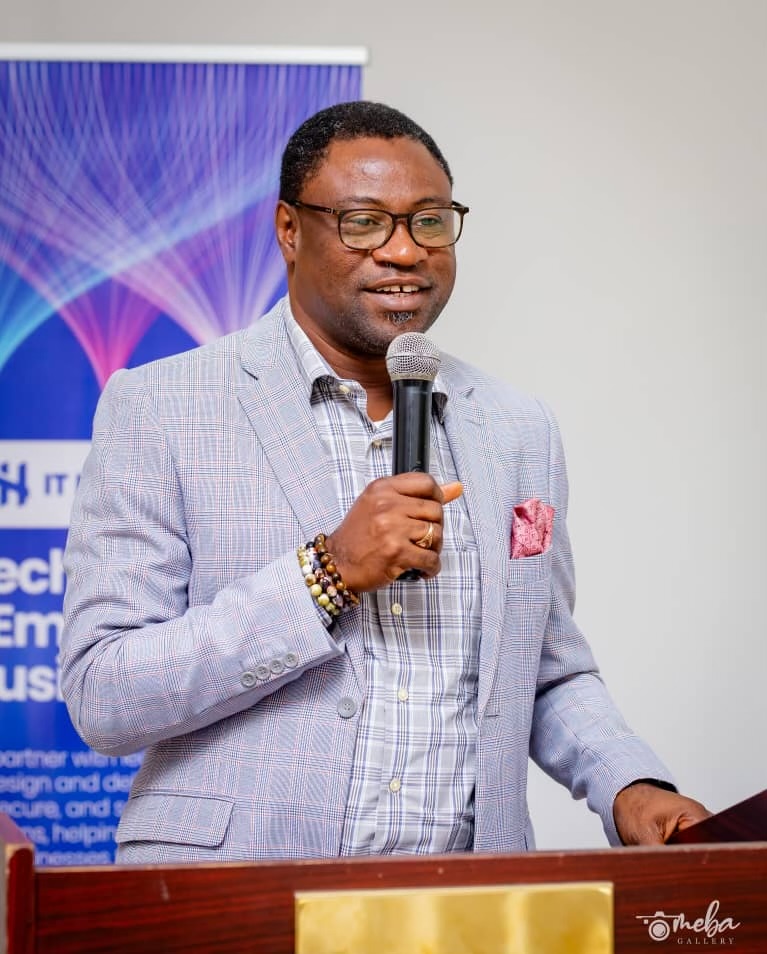

Akparawa (Engr.) Emmanuel Edet Willie says his newly launched foundation will focus on giving young people in Akwa Ibom access to professional technology and technical skills that can improve their chances of finding work and becoming economically independent.
Willie, who spoke exclusively with Olokuns Media Network, said the Akparawa Engr. Emmanuel Edet Willie Foundation was created after more than two decades of working in the telecommunications and information technology sectors across Africa.
Rather than limit the initiative to conventional academic qualifications, he said the Foundation would run two main tracks; information and communication technology (ICT), and solar installation and maintenance.
“The best investment is in human capital,” Willie said.
“What you are able to make help others to grow, the ability to help others to grow, the ability to invest in other people is the only way we can make the world a better place.”
Also Read: CCTV Footage Emerges Over Alleged Theft at Late Actor Cjay Nwok’s Service of Songs in Lagos https://olokunsmedianetwork.com/2026/10/09/cctv-footage-emerges-over-alleged-theft-at-late-actor-cjay-nwoks-service-of-songs-in-lagos/
Why the Foundation is focusing on access
Willie said his experience working across the technology industry had exposed him to the opportunities created by digital skills, but also to what he described as limited representation of people from Akwa Ibom in senior technology positions.
He said the Foundation was his attempt to address that gap by giving young people access to training that might otherwise be beyond their reach.
“We cannot wait for the government to do everything. The government is trying their own part,” he said.
“So we as individuals, we have seen this thing, we cannot pretend to close our eyes to it. And we need to invest in the next generation.”
The Foundation will initially target 50 young people from Akwa Ibom, with Willie saying the selection would be spread across the state.
“I would draw them from across, at least one from each local government of Akwa Ibom State,” he said.
Akwa Ibom has 31 local government areas, meaning the proposed distribution would require the Foundation to select additional beneficiaries beyond one person from each area.
From ICT to solar skills
The Foundation’s main focus will be ICT, but Willie said he recognised that not every prospective beneficiary would follow an academic or conventional technology career.
That is why the programme will also include technical training in solar installation and maintenance.
“I also understand that there are so many people who are not so academically inclined to be able to work, look at the intelligent question, but they are hands-on, whatever they can do,” he said.
“So I introduced also a technical training, but then focus on emerging technology, which is solar maintenance and installation.”
The approach, he said, is intended to widen access rather than create a programme exclusively for university graduates or people already working in technology.
“We have two variants. The main focus is in ICT, and the other one is in solar installation and maintenance.”
Training alone is not the goal
For Willie, the Foundation’s ambition goes beyond giving beneficiaries certificates.
He said the objective is to train people for skills that can translate into employment, remote work and other economic opportunities.
“I mentioned that the key vision of this initiative is not just to train, but it’s to train and deploy,” he said.
One of the Foundation’s planned ICT pathways is Cisco’s CCNA certification. Cisco describes CCNA as a certification covering areas including network fundamentals, IP connectivity, security, automation and programmability.
Willie argued that demand for skilled technology professionals creates opportunities for people who develop the right skills.
“There are gaps. So the vision here is I want to believe that after 50, I want to believe that these 50 should be able to turn around to produce 500 and the 500 should be able to produce a 5,000.”
That multiplier effect is currently an ambition rather than a measured outcome. The Foundation will need to demonstrate how its graduates progress from training into employment or further opportunities if it is to establish whether the model is working.
A Foundation with a wider social goal
Willie also linked the initiative to concerns about youth unemployment and the vulnerability of young people to crime and street cultism.
He said the Foundation aims to help young people become economically productive rather than simply provide short-term assistance.
“The whole idea is to lift the youth of Akwa Ibom from the menace of having these street cults, which is almost consuming our youth, to elevate them to become economically viable, responsible, and contribute to the growth and the economy of Akwa Ibom State.”
He stressed that he did not want the Foundation to be viewed as a handout programme.
“50 is just a starting point,” he said.
“Let us see how we can do more than 50. Let us see how we can help these youths because 5-10 years from now, if we look back, if we work together, if we collaborate, we will be grateful to God that yes, we did not allow this time to pass us by.”
How the Foundation fits into Akwa Ibom’s skills push
The Foundation is entering an environment where youth skills development is already receiving significant attention from the Akwa Ibom State Government.
Governor Umo Eno’s administration is establishing youth development centres across the state’s 31 local government areas, with the government saying the centres will provide access to skills training, entrepreneurship opportunities, innovation and other support for young people, particularly in rural communities.
The state government has also said the centres are expected to train 31,000 young people annually when the network is fully operational.
That creates an opportunity for private initiatives such as Willie’s Foundation to complement public programmes, particularly if they can reach beneficiaries who remain outside existing training systems.
But the scale of the challenge also means that 50 beneficiaries will be only a small intervention in a state with a much larger youth population.
The Foundation’s longer-term impact will therefore depend on whether it can secure sustainable funding, maintain training quality, complete certification, and help beneficiaries convert their skills into actual economic opportunities.

Willie calls for other professionals to participate
Willie said the Foundation should not be treated as a personal project that he alone must fund or operate.
He called on other Akwa Ibom professionals to contribute to youth development.
“We should not call them useless. We should not call them names. They should not be stereotyped,” he said.
“They only need an access. They are intelligent. They are energetic. They are ready to work. They only need access. They are not exposed.”
He added: “Let us pass the same privilege and opportunity to them before we stereotype them.”
Willie said he hoped other professionals would join the initiative so that its reach could expand beyond the first 50 beneficiaries.
The next test: implementation
The Foundation’s immediate challenge is turning its stated ambition into a functioning programme.
Willie said he intends to take the initiative to young people in communities rather than concentrate opportunities in major urban centres.
“Those in Lagos already have opportunity. If they don’t, they should look for it. It is available. It is at their beck and call,” he said.
“I am going back home. I want to invest back home. I want to reach to the son of that poor man, to the daughter of that poor widow in the village. I want to give them hope and support.”
The Foundation’s success will ultimately be judged not by the launch ceremony or the number of people enrolled, but by what happens to its beneficiaries afterwards.
For the first 50 trainees, the critical questions will be whether they complete their training, obtain the relevant certifications, secure employment or build viable businesses, and whether the Foundation can provide evidence of those outcomes.
For Willie, however, the starting point is access.
“I am becoming a voice to the voiceless. I want to beam light to the dark corners of Akwa Ibom,” he said.
“I am going back to the hinterlands. I am going back home to support those, give them access, so that they in turn will become light to their immediate communities.”
To read more about the foundation, visit their official website via: www.akpeewf.org