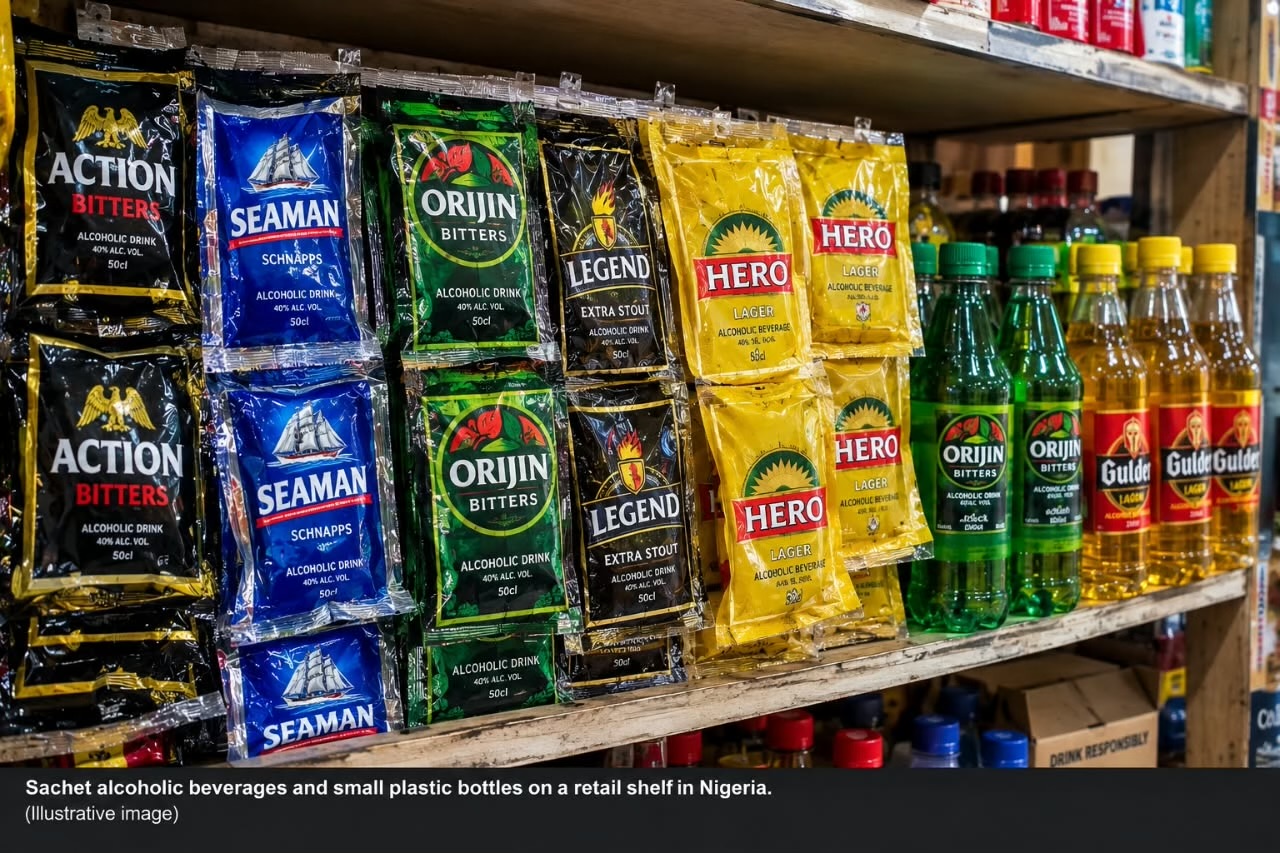

Two Nigerian civil society leaders have called on the National Assembly to expedite consideration of the National Alcohol Control Bill, arguing that existing measures do not adequately address underage drinking and alcohol-related harm.
Philip Jakpor, executive director of Renevlyn Development Initiative, and Chijioke Nwokocha, executive director of Motivator’s Crib Africa, said comprehensive legislation would strengthen controls on alcohol marketing, advertising and sales.
Their appeal comes as the Federal Government implements the Nigeria Alcohol Policy and its Multisectoral Implementation Plan for 2026–2030, which aims to reduce alcohol-related harm while supporting responsible business practices.
The National Alcohol Control Bill, 2026, sponsored by House of Representatives member Oluwatimehin Adelegbe, was listed for its first reading on 22 April 2026, according to the National Assembly’s official records.
However, the bill’s subsequent legislative progress requires confirmation. Its introduction does not mean that lawmakers have approved it or that its proposed provisions are already enforceable.
What does the bill seek to change?
The bill seeks to establish a national framework for controlling and reducing alcohol-related harm in Nigeria.
According to Jakpor and Nwokocha, the proposed legislation would provide standards for alcohol marketing, advertising and promotion in public spaces and the media.
They also argue that the legislation would integrate evidence-based alcohol control measures into national strategies for preventing non-communicable diseases.
The authors say a comprehensive law could strengthen the work of regulatory agencies, including the National Agency for Food and Drug Administration and Control (NAFDAC), by providing a clearer framework for alcohol regulation.
However, the full text of the bill needs to be examined to establish its precise provisions, proposed penalties, enforcement responsibilities and implications for manufacturers, distributors and retailers.
These details will determine how much the proposed law would change existing regulatory arrangements.

Credit: ChatGPT
What does the evidence say about underage drinking?
The call for stronger regulation comes amid concerns about children’s access to alcoholic beverages.
In February 2026, NAFDAC published findings from a survey conducted in collaboration with the Distillers and Blenders Association of Nigeria (DIBAN).
The study, conducted between June and August 2021, covered 1,788 respondents across six states representing Nigeria’s six geopolitical zones.
The findings showed that 54.3% of minors and underage respondents obtained alcoholic drinks themselves from various sources.
Among those who bought alcohol themselves, 47.2% of minors and 48.8% of respondents aged 13 to 17 bought drinks in sachets.
The survey also found that 41.2% of minors and 47.2% of underage respondents who purchased alcohol themselves bought drinks in small plastic bottles.
NAFDAC reported that retailers selling sachets and small plastic bottles were among the sources used by young people to obtain alcohol.
However, the findings require careful interpretation.
The survey covered six states rather than every state in Nigeria. It also dates from 2021, meaning it cannot, on its own, establish the current national prevalence of underage drinking or measure the effects of subsequent regulatory interventions.
The study was sponsored by DIBAN, an industry association, and conducted by Research and Data Solutions Ltd. Its findings provide useful evidence about access to alcohol among the respondents, but they should not be presented as a current nationwide estimate without further evidence.
Also Read: Video of Alleged Cult Activities Outside Rivers Police Station Circulates on X https://olokunsmedianetwork.com/2026/10/16/video-of-alleged-cult-activities-outside-rivers-police-station-circulates-on-x/
Why are sachet alcoholic drinks a concern?
Sachets and small bottles make it easier to carry and conceal alcoholic beverages.
Public health officials have raised concerns that these products can make alcohol more accessible to children and adolescents, particularly when retailers fail to check customers’ ages.
NAFDAC’s survey found that 49.9% of the minors and underage respondents accessed alcohol through friends and relatives. Another 45.9% obtained it at social gatherings.
These findings suggest that restricting certain package sizes alone may not eliminate underage drinking.
Even if sachet products become less accessible, young people may still obtain alcohol through other packaging, informal sales, family members and social networks.
Effective regulation would therefore require more than restrictions on product packaging. Age verification, retailer compliance, public education, enforcement and monitoring of alcohol marketing would also need attention.
Jakpor and Nwokocha argue that alcohol advertising and popular culture can normalise drinking among young people.
Their article calls for legislation that addresses not only the sale of alcohol but also its promotion through television, the internet, outdoor advertising and other media.
The extent to which the proposed bill would restrict these activities, and how such restrictions would operate, will depend on the bill’s actual provisions.
The sachet alcohol ban and its enforcement challenges
Nigeria’s efforts to restrict sachet alcohol predate the current bill.
In December 2018, NAFDAC, the Federal Ministry of Health and the Federal Competition and Consumer Protection Commission entered into an agreement with industry associations to phase out alcoholic beverages packaged in sachets and containers smaller than 200 millilitres.
The original phase-out deadline was 31 January 2024.
However, implementation encountered disagreements, and the deadline was extended.
In November 2025, NAFDAC reaffirmed its commitment to enforcing the restriction by the end of that year, following a Senate resolution calling for the ban to proceed.
The agency said the measure covered spirit drinks sold in sachets and small-volume PET or glass bottles below 200 millilitres.
NAFDAC subsequently published findings in March 2026 highlighting the accessibility of these products to children and adolescents.
The Federal Government also launched the Nigeria Alcohol Policy and its Multisectoral Implementation Plan for 2026–2030 in August 2026.
At the launch, the Ministry of Health and Social Welfare said the policy would combine public health protection with responsible industrial development, employment and economic growth.
The ministry also reported that NAFDAC had reached an agreement with manufacturers to end sachet alcohol production.
However, the precise current enforcement position requires further clarification from NAFDAC and the relevant government authorities.
The continued presence of sachet alcohol in the market, if independently established, would raise questions about compliance, distribution channels and the effectiveness of enforcement.
Jakpor and Nwokocha argue that the products have not disappeared entirely and that some sales have moved underground.
That claim requires independent verification through market checks, enforcement records and responses from retailers and manufacturers before it can be treated as an established description of the current market.
What are the potential benefits and risks of the proposed law?
A comprehensive alcohol control law could help Nigeria coordinate its response to harmful drinking.
For children and adolescents, stronger age restrictions, responsible marketing standards and effective enforcement could reduce exposure to alcohol and make underage purchases more difficult.
For families and communities, measures that reduce harmful consumption could help address some of the health and social consequences associated with alcohol misuse.
For regulators, clearly defined responsibilities and enforceable standards could improve coordination and accountability.
However, the effectiveness of these measures would depend on their design and implementation.
A law that restricts certain products without addressing illegal sales, alternative packaging and other routes of access could have limited impact.
There are also potential economic consequences.
Alcohol manufacturing and distribution support jobs, retail businesses, agriculture and other parts of Nigeria’s domestic supply chain.
The Federal Ministry of Health and Social Welfare acknowledged these economic interests when it launched the national alcohol policy, saying the government sought to promote responsible industry practices rather than undermine legitimate businesses.
Restrictions could nevertheless impose costs on manufacturers, distributors and retailers, particularly businesses that depend on the affected products.
Some workers and small retailers could face reduced earnings if companies discontinue products or restructure their operations.
The scale of these effects would depend on the law’s final provisions, the availability of alternative products, transition arrangements and the response of businesses.
Poorly designed restrictions could also encourage illegal sales or unregulated products, creating additional challenges for consumers and enforcement agencies.
Lawmakers must therefore assess both the public health case for regulation and the practical consequences for legitimate businesses.
Why the media and advertising provisions matter
Jakpor and Nwokocha argue that regulating alcohol packaging alone would leave a major part of the problem unaddressed.
Their proposed approach includes controls on how alcohol companies advertise and promote their products.
This issue matters because children and young people encounter marketing through television, social media, entertainment and public advertising spaces.
However, the specific relationship between alcohol marketing and consumption among Nigerian children needs to be assessed using relevant research rather than assumed in every case.
If the bill introduces tighter advertising rules, lawmakers will need to define what constitutes prohibited promotion, which platforms the rules cover and how regulators would monitor compliance.
They must also consider how restrictions would apply to digital advertising, influencer marketing, sponsorships and content distributed across international platforms.
Clear rules would help businesses understand their obligations and give regulators a basis for consistent enforcement.
The legislation should also provide transparent procedures for handling alleged breaches and allow affected parties to challenge regulatory decisions through appropriate legal channels.
What happens next?
The immediate question is whether the National Assembly will advance the National Alcohol Control Bill beyond its first reading.
Lawmakers need to examine the bill’s provisions, obtain expert evidence and hear from relevant stakeholders before deciding whether to approve it.
These stakeholders should include public health professionals, child protection advocates, regulators, manufacturers, retailers, researchers and communities affected by harmful alcohol use.
The process must also address potential conflicts of interest. Industry representatives can provide important information about employment, production and distribution, but their commercial interests should not determine public health policy.
Similarly, civil society organisations advocating tighter controls should support their recommendations with evidence and remain open to scrutiny of their proposed measures.
The Federal Government must clarify how the national alcohol policy will operate alongside existing regulations and any new legislation.
NAFDAC and other relevant agencies should publish clear information about enforcement, compliance, seizures, prosecutions and the availability of restricted products.
Such information would help the public assess whether current measures are working and identify the gaps that new legislation needs to address.
The proposed law could strengthen Nigeria’s response to alcohol-related harm, but its impact will depend on more than its passage.
Lawmakers must establish clear and proportionate rules, while regulators must enforce them consistently and transparently.
For now, the central question is whether Nigeria can translate its existing policy commitments into an effective system that protects young people without imposing unnecessary burdens on legitimate businesses.