
Nigerians care deeply about the health, safety and development of the younger generation. This makes the effective regulation of alcoholic beverages, particularly products that are easily accessible to children and adolescents, an urgent public health priority.
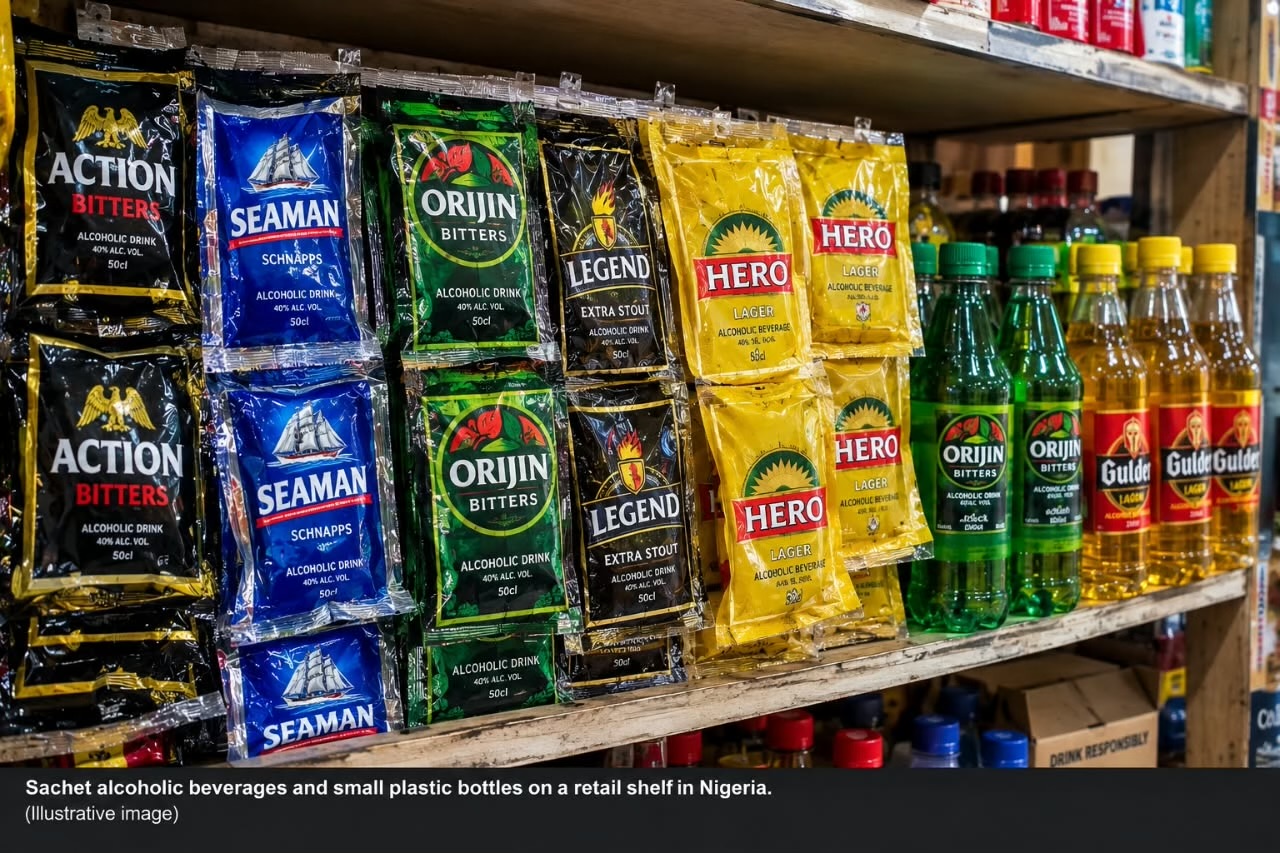
The enforcement of restrictions on alcoholic beverages in sachets and small plastic bottles by the National Agency for Food and Drug Administration and Control (NAFDAC) is a step towards addressing this concern. However, restrictions on packaging alone cannot resolve the wider challenges associated with alcohol consumption, underage access and aggressive marketing.
NAFDAC has raised concerns about the accessibility of alcoholic beverages to minors. The agency has also highlighted the risks associated with products that are affordable, easy to conceal and readily available through retail outlets.
The alcohol industry’s opposition to restrictions on sachet products raises important questions about how Nigeria should balance commercial interests with public health protection. While businesses have legitimate interests in protecting their investments and jobs, these interests should not override the need to protect children and young people from preventable harm.
Protecting children from alcohol-related harm
According to figures cited in public discussions on alcohol regulation, a significant proportion of Nigerian minors consume alcohol. Such claims must be assessed against the underlying research, including the age groups studied, the geographical coverage and the methods used to collect the data.
Nevertheless, concerns about children’s access to alcohol deserve serious attention. Studies have linked harmful alcohol consumption to a range of health and social problems, including injuries, road traffic crashes, domestic violence and long-term health complications.
The consequences extend beyond individual drinkers. Families, communities, healthcare providers and the wider economy can bear the costs of alcohol-related harm.
For children and adolescents, early exposure to alcohol raises particular concerns because it can contribute to patterns of harmful consumption and expose them to avoidable health and social risks.
These challenges require a coordinated response that goes beyond restricting particular product sizes.
Why the sachet alcohol restrictions matter
The implementation of restrictions on sachet alcohol has generated disagreement between regulators and industry stakeholders.
The policy aims to reduce access to alcoholic products that can be carried discreetly and sold in small quantities. However, its effectiveness depends on consistent enforcement and the availability of reliable evidence about compliance.
Restrictions alone cannot guarantee that underage drinking will decline. Young people may still obtain alcohol through other packaging, informal sales, friends, relatives and social gatherings.
This means that regulators must address the different ways minors access alcoholic beverages rather than relying exclusively on packaging restrictions.
NAFDAC and other relevant agencies must also monitor the market, investigate suspected violations and publish information that allows the public to assess the policy’s effectiveness.
Where restricted products remain available, authorities should establish whether the problem arises from illegal distribution, non-compliance by businesses, weaknesses in enforcement or other factors.
The objective should be to ensure that regulations achieve their intended public health outcomes rather than simply changing how alcoholic products reach consumers.
Also Read: Rivers Police Remove DPO, Order Probe After Vikings Group Renovates Outpost https://olokunsmedianetwork.com/2026/10/16/rivers-police-remove-dpo-order-probe-after-vikings-group-renovates-outpost/
Why Nigeria needs a comprehensive alcohol control law
The proposed National Alcohol Control Bill offers an opportunity to establish a more coordinated legal framework for addressing alcohol-related harm.
Sponsored by Hon. Oluwatimehin Adelegbe, chairman of the House of Representatives Ad Hoc Committee on Drug Trafficking, Tobacco and Alcohol Abuse, the bill seeks to provide a national framework for controlling and reducing the harmful effects of alcohol.
The proposal aims to integrate evidence-based alcohol control measures into national non-communicable disease strategies. It also seeks to establish standards for alcohol marketing, advertising and promotion in public spaces and the media.
A comprehensive law could clarify the responsibilities of government agencies, strengthen enforcement and provide a more consistent basis for regulating alcohol-related activities.
It could also help address gaps that individual policies and administrative measures may not adequately cover.
However, the bill’s precise provisions, enforcement mechanisms and proposed penalties must be examined carefully. Lawmakers should ensure that any new legislation complements existing laws, avoids unnecessary duplication and establishes clear responsibilities for the relevant agencies.
The National Assembly should also ensure that the proposed framework rests on credible evidence and provides measurable objectives against which its effectiveness can be assessed.
The influence of advertising and popular culture
Alcohol regulation must extend beyond products displayed on shop shelves.
Children and young people encounter alcohol-related messages through television, social media, outdoor advertising, entertainment and other forms of popular culture.
Such exposure raises concerns about how alcohol consumption is presented to young audiences and whether marketing practices contribute to the normalisation of drinking.
Alcohol advertising and promotion should therefore form part of the wider policy discussion.
The proposed legislation could provide an opportunity to establish clear standards for alcohol marketing and reduce young people’s exposure to inappropriate promotional content.
However, these standards must be clearly defined and consistently enforced. Regulators should consider the different ways advertising reaches audiences, including digital platforms, influencer marketing, sponsorships and other promotional activities.
The legislation should also distinguish between activities that expose children to inappropriate alcohol promotion and lawful communications directed at adult consumers.
Clear rules would help businesses understand their obligations and enable regulators to enforce the law fairly.
The need to strengthen NAFDAC’s regulatory role
NAFDAC plays an important role in regulating food, medicines and other products within its statutory responsibilities. Its efforts to address concerns about sachet alcohol demonstrate the importance of effective product regulation.
However, regulatory agencies can face challenges when policies encounter resistance, implementation responsibilities overlap or enforcement arrangements lack sufficient clarity.
A comprehensive alcohol control law could help establish a more coordinated national response and clarify how relevant agencies should work together.
It could also provide a stronger basis for monitoring compliance and addressing violations.
The proposed law must not, however, be treated as a substitute for effective enforcement. Even well-designed legislation will have limited impact if authorities lack the resources, coordination and accountability mechanisms needed to implement it.
The government should therefore consider the practical requirements of enforcement, including staffing, monitoring, public education and access to reliable data.
Balancing public health with legitimate business interests
Alcohol regulation has implications for businesses, workers and consumers.
Manufacturers, distributors and retailers operate within a commercial sector that supports employment and contributes to economic activity. Changes to product restrictions and advertising rules may require businesses to adjust their operations, supply chains and marketing practices.
These effects deserve consideration, particularly for small retailers and workers who may depend on affected products for their livelihoods.
However, economic interests must be weighed against the public costs associated with harmful alcohol consumption.
The appropriate response is not to dismiss business concerns or allow them to prevent necessary public health measures. Instead, policymakers should establish clear, proportionate and evidence-based rules.
Government should also consider whether businesses need reasonable transition arrangements, guidance on compliance or support in adapting to new requirements.
At the same time, regulators must guard against conflicts of interest and ensure that commercial influence does not undermine the objectives of alcohol control policy.
The ultimate goal should be a framework that protects public health, supports responsible business practices and holds all stakeholders accountable.
Why the National Assembly must act now
The National Assembly has an opportunity to strengthen Nigeria’s response to alcohol-related harm by giving the proposed National Alcohol Control Bill serious and timely consideration.
As the 10th National Assembly approaches the end of its tenure, lawmakers should clarify the bill’s legislative timetable and ensure that its consideration does not lose momentum.
Delays could prolong uncertainty over the national approach to alcohol regulation and leave important questions about enforcement, advertising and coordination unresolved.
The legislative process must be transparent, inclusive and informed by evidence. Public health experts, civil society organisations, affected communities, relevant government agencies, researchers and industry representatives should have opportunities to contribute.
However, participation must not become a means of delaying necessary action or allowing commercial interests to dictate public health policy.
Lawmakers should scrutinise the evidence, assess the likely effects of the proposed provisions and establish clear mechanisms for implementation and accountability.
The way forward
Passing the National Alcohol Control Bill would be an important step, but legislation alone will not solve Nigeria’s alcohol-related challenges.
The government must establish measurable targets, publish regular implementation reports and evaluate whether its interventions reduce underage access and harmful consumption.
NAFDAC and other relevant agencies should provide transparent information on inspections, compliance, enforcement actions and emerging challenges.
Policymakers should also invest in public education, strengthen age-verification measures and support research into the effectiveness of alcohol control interventions.
These measures would help identify what works, expose weaknesses and guide improvements to the regulatory framework.
The proposed legislation should also be reviewed periodically to ensure that it responds to changing marketing practices, new distribution channels and emerging public health evidence.
The task before the National Assembly is clear: give the National Alcohol Control Bill urgent and evidence-based consideration.
Nigeria needs an alcohol control framework that protects children and young people, strengthens regulatory accountability and recognises the legitimate interests of businesses without allowing profit to take precedence over public health.
The health and future of Nigerians must remain central to national priorities. The time to act is now.
Philip Jakpor is the executive director of Renevlyn Development Initiative.
Chijioke Nwokocha is the executive director of Motivator’s Crib Africa.