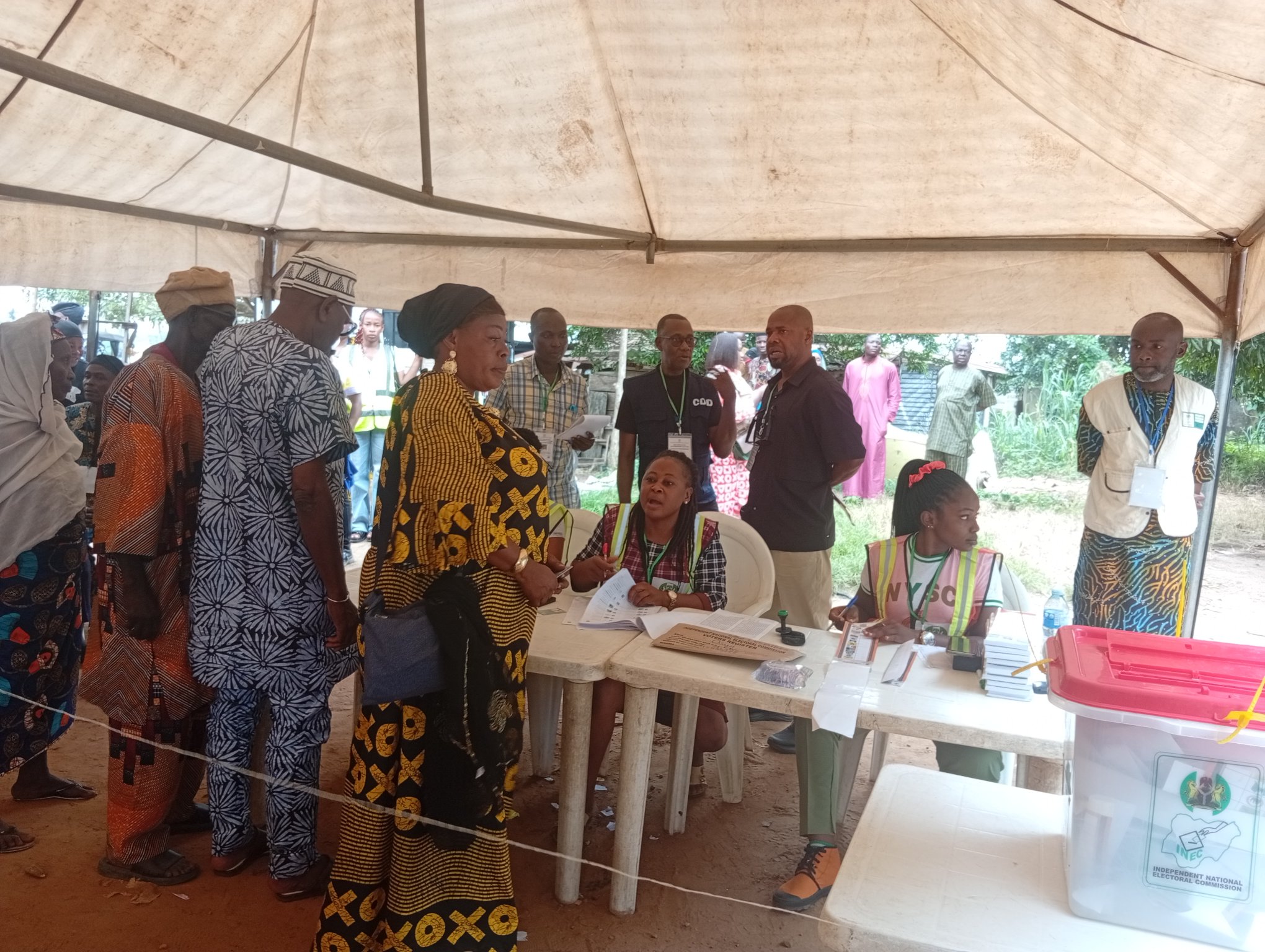

The New Generation Girls and Women Development Initiative (NIGAWD) says vote buying was the most consistent integrity concern recorded by its youth assessors during the 15 August Osun State governorship election.
The organisation said its assessors reported vote-buying incidents at more than half of the polling units covered by its assessment, with reports ranging from open cash handouts to arrangements in which voters' names were recorded for later payment.
NIGAWD, which coordinated the South-West arm of the Youth Electoral Reform Project (YERP-Naija), published the findings in an assessment of the election based on reports from youth volunteers deployed across the state's 30 local government areas.
The organisation said the assessment was not designed to represent every polling unit in Osun State.
Instead, it was intended to provide a picture of how selected provisions of the Electoral Act 2026 were implemented at polling-unit level.
What did the youth assessors find?
According to NIGAWD, its assessors submitted 36 structured polling-unit reports covering youth participation, downloadable Permanent Voter's Cards (PVCs), and the handling and electronic transmission of election results.
The organisation reported a relatively strong presence of young voters at the polling units it monitored.
It said between 50 and 200 young people voted at 19 of the 36 polling units, representing 53% of the assessed locations.
Between 201 and 500 young voters were recorded at another eight polling units.
First-time voters were reported at 33 of the 36 polling units assessed.NIGAWD said the findings suggested meaningful youth participation, although it stressed that the assessment was not a scientific survey.
Digital PVCs accepted in assessed polling unitsThe assessment also examined the use of downloadable or digital PVCs, one of the electoral reforms the organisation said it had advocated.
NIGAWD reported that downloadable PVCs were presented at nine of the 36 polling units assessed.
It said none of the assessors recorded an outright rejection when a downloadable PVC was presented.
In five cases, officials accepted the digital PVC immediately, while in eight cases acceptance followed clarification.
The organisation said polling officials generally appeared familiar with the procedures, although some voters and party agents questioned the use of downloadable PVCs.
NIGAWD described the availability of the digital option during the Osun election as an improvement compared with the June 2026 Ekiti governorship election, where it said INEC had failed to deliver on the same commitment.
The organisation said it had raised the issue with INEC officials before the Ekiti election and later with electoral stakeholders in Osun.
Most result sheets uploaded to IReV
The assessment found that Form EC8A, the polling-unit result sheet, was completed in 34 of the 36 polling units monitored.
NIGAWD said the completed result sheets were displayed for party agents and observers to inspect in 32 polling units.
Presiding officers attempted to upload results to the INEC Result Viewing (IReV) portal in 33 of the 36 polling units, while successful uploads were recorded in 28 polling units, or 78% of those assessed.
The organisation said the figures showed progress in electronic result management but also identified gaps that INEC would need to address before the 2027 general election.
It specifically called for improvements to the result-transmission system and greater transparency around the electronic transmission process.
Also Read: Osun Election 2026: What Adeleke’s Victory Means for the State
NIGAWD calls for action ahead of 2027
The organisation urged the Independent National Electoral Commission (INEC) to address technical problems affecting the IReV platform and improve the reliability of electronic result transmission.
It also called for the result-transmission process to be opened further to political parties and civil society organisations to strengthen transparency and accountability.
On downloadable PVCs, NIGAWD urged INEC to expand the pilot, provide clearer information and strengthen the training of polling officials.
It also called on the commission to engage electoral stakeholders after elections and publish lessons and corrective measures before the 2027 general elections.
The organisation said INEC should also improve the integrity of the voter register to strengthen public confidence.
Security agencies urged to investigate violence
NIGAWD also called on the police and other security agencies to investigate reported incidents of electoral violence during the Osun election, including deaths and alleged incitement.
It urged authorities to prosecute perpetrators and their accomplices where evidence supports such action.
The organisation also recommended post-election dialogue involving INEC, political parties, civil society organisations, youth groups, women-led organisations, persons with disabilities, the media and other stakeholders.
It said such discussions should result in specific actions, responsible institutions and timelines for fixing weaknesses identified during the election.

Why the assessment matters
The assessment comes as Nigeria looks towards the 2027 general elections, with NIGAWD arguing that changes to electoral law will have limited value if polling officials, political actors and other stakeholders do not implement them properly.
The organisation's monitoring focused on practical questions facing voters: whether young people participated, whether voters could use downloadable PVCs and whether polling-unit results were completed, displayed and transmitted electronically.
Its findings therefore point to both progress and unresolved problems.
The reported acceptance of downloadable PVCs suggests that the new voting option was operational in some of the locations assessed.
However, its presence in only nine of the 36 polling units monitored indicates that the experience was not uniform across the sample.
Similarly, the successful electronic upload of Form EC8A in 28 of the 36 assessed polling units means that the process worked in most of the locations covered, but not all.
Vote buying remains the most significant concern identified by the organisation.
NIGAWD said its assessors recorded the practice across multiple political parties and local government areas.
However, the organisation did not provide a breakdown of the alleged incidents by party or the total amount of money involved.
What happens next?
NIGAWD said it would continue documenting citizens' experiences with electoral reforms and support youth participation ahead of the 2027 elections.
It said lessons from the Osun election would inform further voter education, civic engagement and legal-compliance monitoring.
The organisation concluded: “Strong laws do not guarantee credible elections—implementation, accountability, and citizen trust do.
Osun 2026 is a test of that principle.”
The next test will be whether INEC, political parties, security agencies and other electoral stakeholders act on the weaknesses identified by the assessment before the 2027 general elections.