Ondo State Governor, Lucky Aiyedatiwa has begun mobilising members of the All Progressives Congress (APC) for the 2027 general elections, calling on party elders to close ranks and support President Bola Ahmed Tinubu and other APC candidates.
Aiyedatiwa made the call on Monday at a meeting of the APC Elders Council at the Government House in Akure.
The governor said the APC must operate as a single political structure across Ondo State and rejected attempts to create rival factions within the party.
“APC is one. There are no two APCs in Ondo State. APC is one, All Progressives Congress,” he said.
He directed the Elders Council to become active in all 18 local government areas, saying the move would bring senior party members closer to grassroots structures.
Why the mobilisation matters
The 2027 elections are still months away, but parties are already positioning themselves for the next electoral cycle.
For the APC in Ondo, the governor's emphasis on unity comes as the party prepares to defend its influence in a state where internal disagreements could affect its ability to mobilise voters.
Aiyedatiwa said party members must support APC candidates for the Senate, House of Representatives and State House of Assembly, rather than focus only on individual political interests.
He said the party should organist across the state's 18 local government areas, 203 wards and 3,933 polling units.
“The first thing is to bring everybody together under one umbrella; the umbrella of APC. We have only one party and we have only one chairman,” he said.
The governor also called for greater participation by elders, women and young people in both party activities and governance.
Also Read: Lagos NIPR Opens Entries for 2026 PR Awards With New AI Categories
Governor backs Tinubu
Aiyedatiwa also urged APC members to support President Tinubu's bid for another term.
He argued that the best way for party members to support the president was to remain united and vote for him in the next election.
The governor praised Tinubu's economic reforms, saying they had increased the resources available to state governments for development projects.
He described the president as “very courageous” and “very bold” in taking decisions that he said would help the country and its states develop.
Those comments reflect the APC's broader effort to present the federal government's policies as a reason for voters to retain the party in power.
However, the impact of those reforms remains a matter for voters to assess against issues such as inflation, household purchasing power, employment and the cost of living.
Aiyedatiwa highlights jobs and infrastructure
The governor used the meeting to defend the record of his administration, saying his government had recruited more than 6,000 workers since he became governor.
He said the recruits included teachers, health workers, agricultural workers and primary healthcare personnel.
He also said some ad-hoc health workers had received permanent appointments.
Aiyedatiwa said the government had recruited about 500 additional personnel for the state's Amotekun security outfit.
The governor also said road construction was taking place across the 18 local government areas.
He listed urban renewal projects and the Akure flyover among the infrastructure projects undertaken by his administration.
In healthcare, he said contractors had been mobilised for a 250-bed hospital in Ondo town and 100-bed facilities in Okitipupa, Ikare and Irele.
He also said hospitals had received new equipment, including an MRI machine and CT scanner at the University of Medical Sciences Teaching Hospital.
The governor said Ondo State had never bought an MRI machine since its creation.
These figures and claims will be important campaign issues if the projects and recruitment programmes become part of the APC's 2027 election message.
Independent verification of the number of workers recruited, the status of the projects and government spending would provide voters with a clearer basis for assessing the administration's record.
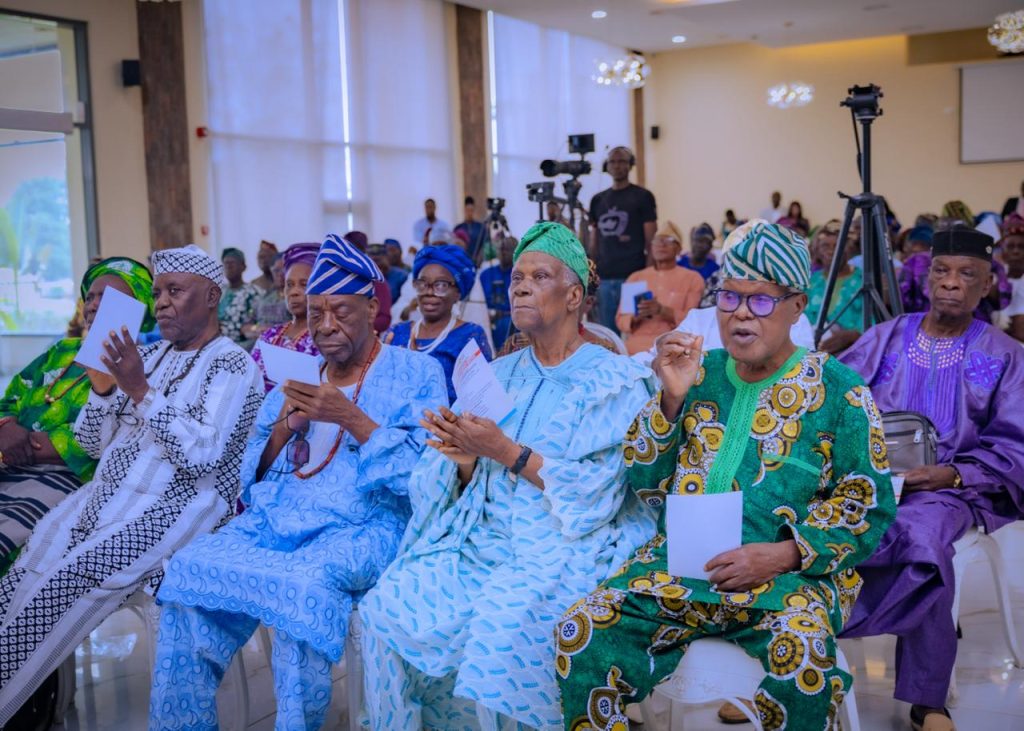
Elders call for unityAPC state chairman Kolawole Babatunde said the experience of the party's older members remained important to its future.
He said the current State Working Committee was relatively young compared with members who had helped build the political movement from the Alliance for Democracy through the Action Congress and eventually to the APC.
Mr Babatunde said the APC constitution recognises the Elders Council as part of the party structure.
He said its responsibilities include advising the party, promoting stability, initiating policies, regulating proceedings and helping formulate a code of conduct.
He argued that the party would make greater progress if it used the experience of its elders.
Earlier, the chairman of the Elders Council, Senator Nimbe Farukanmi, also called for unity and urged members to support Aiyedatiwa and President Tinubu.
He described the meeting as an opportunity for party leaders from Ondo's three senatorial districts to reconnect and discuss the state's political direction.
Farukanmi said the governor had reached out to him on issues involving cooperation among party leaders.
Other APC elders, including Senator Tayo Alasoadura, Joseph Akinlaja, Pastor Segun Ayerin and Jumoke Anifowose-Ajasin, welcomed the meeting and called for support for the party's candidates.
What happens next?
The immediate task for the APC will be to translate the governor's call for unity into functioning structures at local government and ward levels.
The planned activation of the Elders Council across the 18 local governments could give the party a wider grassroots network, particularly if the council succeeds in resolving disagreements rather than becoming another centre of internal competition.
For voters, the more important test will be whether the political mobilisation produces measurable improvements in governance and whether the claims about jobs, healthcare, roads and security can be independently substantiated.
The 2027 elections will ultimately be decided by voters, not party structures.
The APC's ability to maintain unity, defend its record and persuade voters that its candidates should retain power will therefore be central to the next stage of the political contest.