
Health facilities, laboratories and blood establishments in Nigeria's Federal Capital Territory have until the end of September 2026 to register with the National Blood Service Agency (NBSA) or risk regulatory action.
The agency has intensified a sensitisation campaign in Abuja ahead of the deadline, focusing on facilities involved in collecting, testing, processing, storing, distributing and transfusing blood.
The campaign matters because unsafe or poorly managed blood can expose patients to preventable infections, incompatible transfusions and other risks.
Blood is routinely needed for women experiencing complications during pregnancy and childbirth, accident victims, people with severe anaemia and patients undergoing surgery and other major medical procedures.
Why is the NBSA acting now?
The immediate issue is compliance.
The NBSA says its free-registration window for eligible health facilities and blood establishments will close in September.
It is urging facilities that have not registered to complete the process before enforcement begins.
The agency says registration will allow it to monitor facilities, check compliance with standards and identify weaknesses in the blood-safety system.
Its registration guidance states that blood establishments must be inspected and certified before they can operate.
It also requires documentation such as evidence of registration with relevant professional bodies and state health authorities, as well as quality-management information.
What happens to facilities that do not register?
The NBSA says facilities that fail to comply may face enforcement measures, including closure or sealing where legally applicable.
The agency's authority comes from the National Blood Service Commission Act 2021, which established the national regulator and gave it responsibility for coordinating and regulating blood transfusion services across Nigeria.
The law also requires health establishments involved in blood transfusion to comply with the commission's guidelines, undergo inspection and certification, and provide relevant data when required.
The legislation replaced the earlier National Blood Transfusion Service framework and was intended to create a more coordinated national system for blood safety.
That means the September deadline is not simply an administrative registration exercise.
It forms part of a wider regulatory system designed to bring blood services under common standards.
What does registration mean for patients?
For patients, the key question is not whether a facility has completed a form.
It is whether the blood they receive is safe, compatible and properly handled.
The NBSA says facilities must use qualified personnel and maintain appropriate systems for blood collection, testing, storage, transportation, documentation and traceability.
It also says facilities must correctly identify patients and conduct compatibility testing before transfusion.
The World Health Organisation recommends screening every donated blood unit for infections that can be transmitted through transfusion.
It also recommends blood grouping and compatibility testing and quality-assured systems for handling blood and blood products.
This matters because a safe blood system does not end when a donor gives blood. Safety has to be maintained through testing, processing, storage and transfusion.
Nigeria still faces a blood-supply challenge
Regulation is only one part of the problem.Nigeria has struggled for years to secure enough blood from voluntary, unpaid donors.
WHO reported in 2025 that only about 30% of Nigeria's estimated blood requirement was being met, with family-replacement and paid donations accounting for much of the supply.
It said voluntary unpaid donations represented about 10% of blood collected. Earlier WHO reporting estimated Nigeria needed about 1.8 million units of blood annually and highlighted the country's dependence on family-replacement and commercial donors.
The figures underline a wider problem: registering facilities can improve oversight, but it cannot by itself solve shortages.
Nigeria also needs a larger and more reliable pool of voluntary donors, stronger blood-collection networks and better access to safe blood outside major urban centres.
WHO identifies regular voluntary, unpaid donors as the safest donor group because they generally have a lower prevalence of blood-borne infections than family-replacement or paid donors.
What has government promised before?
The creation of the National Blood Service Commission in 2021 was itself part of an attempt to strengthen Nigeria's blood system.
The law gave the regulator responsibility for establishing standards, coordinating public and private blood banks, maintaining quality assurance and promoting voluntary blood donation.
It also provided for a national strategic blood reserve and required blood establishments to work with the national system.
Five years later, the regulator's renewed emphasis on registration raises a practical accountability question: how many facilities are now compliant, and how effectively has the regulatory framework been enforced since the 2021 law came into force?
The NBSA's latest campaign does not provide those figures.
Publishing regular data on registered facilities, inspection outcomes, violations and enforcement actions would make it easier for the public and health sector to judge progress.
What the NBSA says
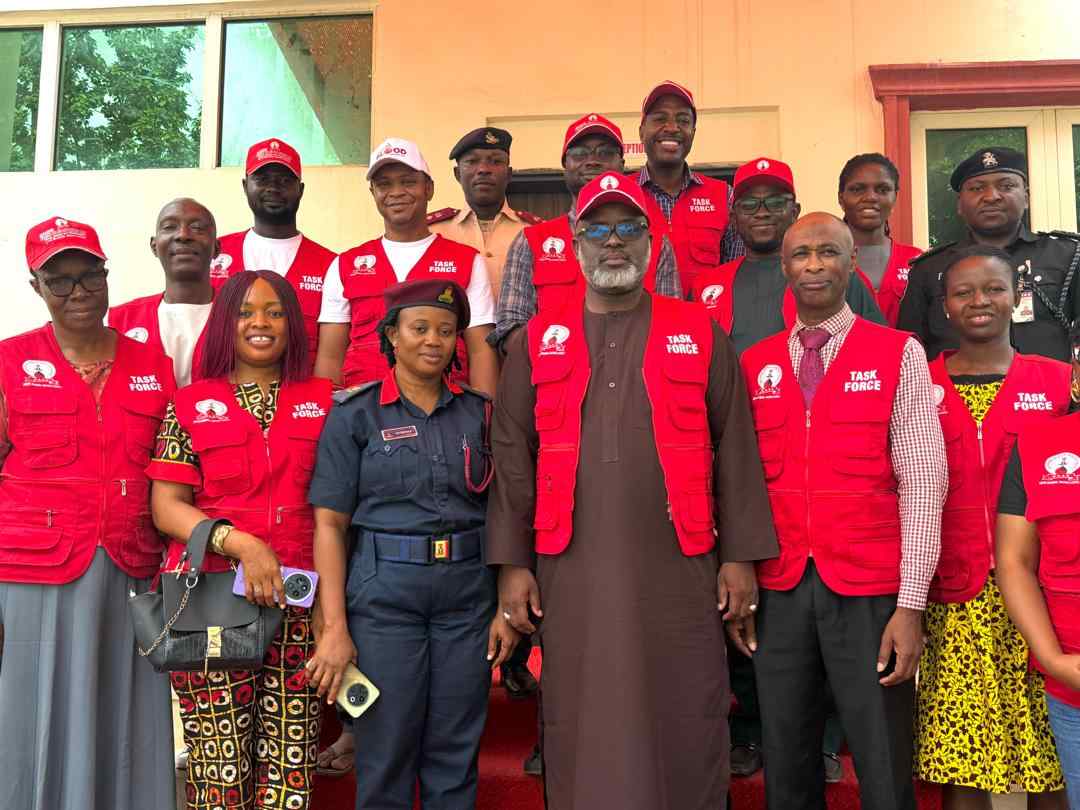
NBSA Director-General Professor Saley Yuguda commended members of the multidisciplinary task force involved in the FCT exercise.
He called for greater cooperation between the agency, health facilities, laboratories and blood establishments.
He also urged unregistered facilities to take advantage of the free-registration period before it closes and warned that non-compliance could lead to enforcement action.
The task force included representatives from the Federal Ministry of Health, Medical and Dental Council of Nigeria, Nursing and Midwifery Council of Nigeria, Medical Laboratory Science Council of Nigeria, Pharmacy Council of Nigeria, Nigeria Police Force, Nigeria Security and Civil Defence Corps, Federal Road Safety Corps and other health and emergency-response bodies.
The NBSA did not provide a breakdown of the number of facilities visited during the campaign or details of specific violations identified in Abuja.
What happens next?
The immediate deadline is September 2026.
Health facilities and blood establishments that have yet to register will need to complete the NBSA's registration requirements and undergo the required regulatory process.
For patients and families, the development is a reminder to ask where blood is being sourced and whether transfusion is being carried out by qualified professionals.
For the government, the bigger test will be whether the registration drive leads to sustained enforcement, better data and measurable improvements in the safety and availability of blood.
Nigeria's blood-safety challenge will not be solved by registration alone.
But effective regulation, proper testing and storage, reliable traceability and a stronger culture of voluntary donation could reduce some of the risks faced by patients who need blood urgently.
The September deadline therefore marks not an end point, but a test of how effectively Nigeria can turn its blood-safety laws into everyday practice.