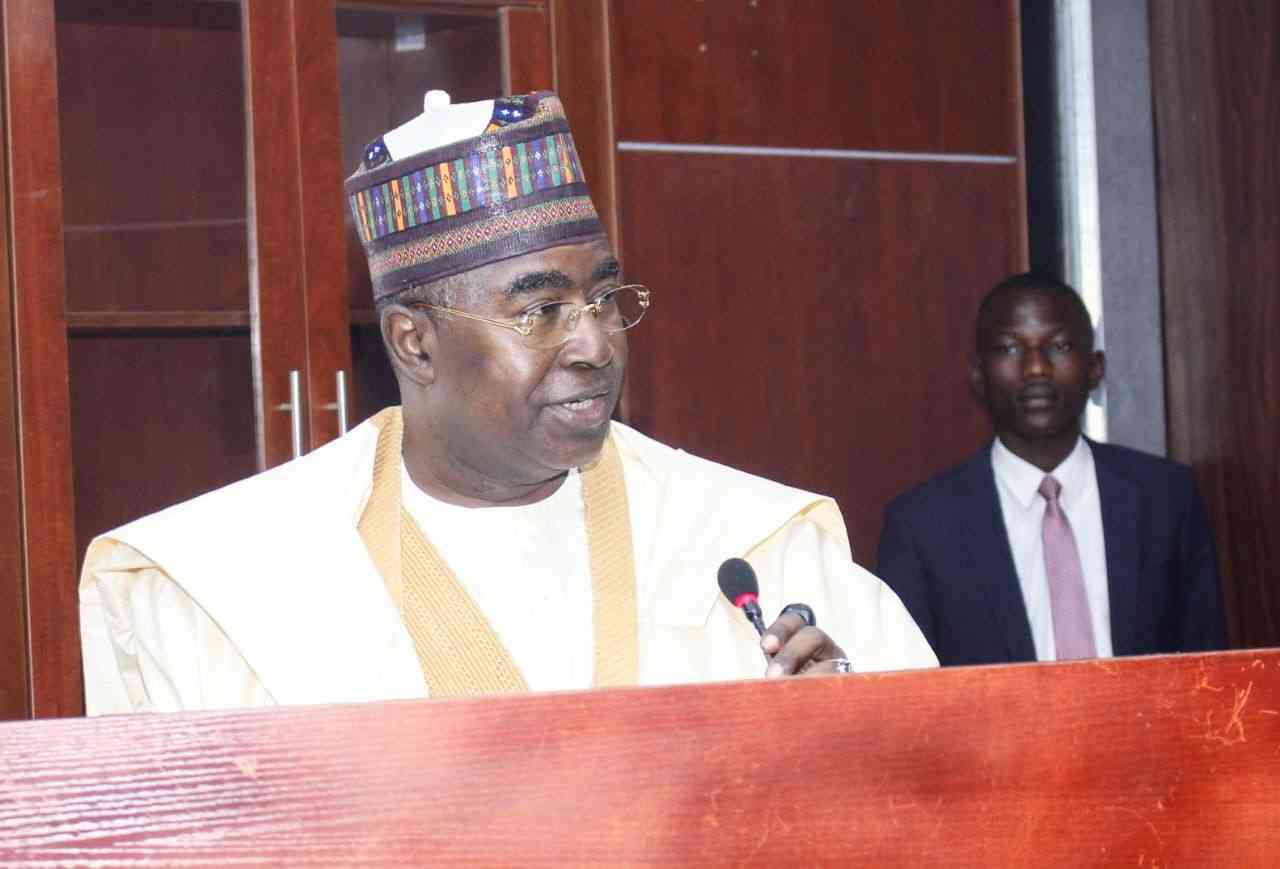

The National Drug Law Enforcement Agency (NDLEA) is shifting greater attention towards the finances that sustain drug trafficking, with its chairman, Brig Gen Mohamed Buba Marwa (retd), directing investigators and prosecutors to trace and recover the proceeds of organised drug crime.
Marwa said the agency could not defeat sophisticated drug networks by arresting couriers and confiscating narcotics while leaving financiers and illicit wealth untouched.
He spoke in Abuja on Wednesday, 2 September, while opening an advanced training programme on financial investigations, asset tracing, forfeiture and management of assets linked to narcotics trafficking and organised crime.
"If we arrest the courier but leave the financier untouched, seize the drugs but allow the proceeds to remain with the criminal enterprise, or secure a conviction without recovering the illicit wealth, we have addressed only part of the problem."
Why is the NDLEA changing its approach?
Drug trafficking generates money as well as narcotics.
For investigators, following that money can help identify the people who finance shipments, launder proceeds or provide legitimate businesses and corporate structures to disguise criminal wealth.
The NDLEA says traffickers are increasingly using technology, cryptocurrencies, complex corporate arrangements and legitimate businesses to hide the ownership and origin of illicit funds.
That means a drug seizure may remove a shipment from circulation without necessarily dismantling the organisation that financed it.
Marwa said the agency's next priority should therefore be to weaken the economic foundations of trafficking and make the business of selling narcotics "high-risk, low-profit".
“The sophistication of organised crime demands a corresponding sophistication in our response.
We must move from crime detection to crime disruption; from arresting offenders to dismantling criminal enterprises; and from confiscating drugs to depriving traffickers of the wealth that motivates and sustains their activities.
The drug trafficking ecosystem intersects with money laundering, corruption, cybercrime, human trafficking, illicit arms trafficking and other forms of organised crime.
These intersections make sustained cooperation, within the NDLEA and among our partner institutions, not merely desirable, but indispensable”, he stated.
The approach also reflects a broader law-enforcement principle: removing the financial incentives behind organised crime can have a greater long-term effect than targeting individual couriers.
What happens to recovered assets?
Asset seizure does not automatically translate into public benefit.
Marwa warned that recovered property and funds could lose value if authorities manage them poorly or fail to maintain transparency throughout the recovery process.
He said accountability should continue from the initial seizure through forfeiture, management and eventual disposal or realisation of assets.
That raises an important question for the public: how will authorities demonstrate what has been recovered, what those assets are worth and what eventually happens to them?
The NDLEA chairman did not announce a new public reporting mechanism at the event.
The effectiveness of the strategy will therefore depend not only on investigators' ability to trace assets but also on transparent management and judicial processes.
Courts and financial agencies brought into the process
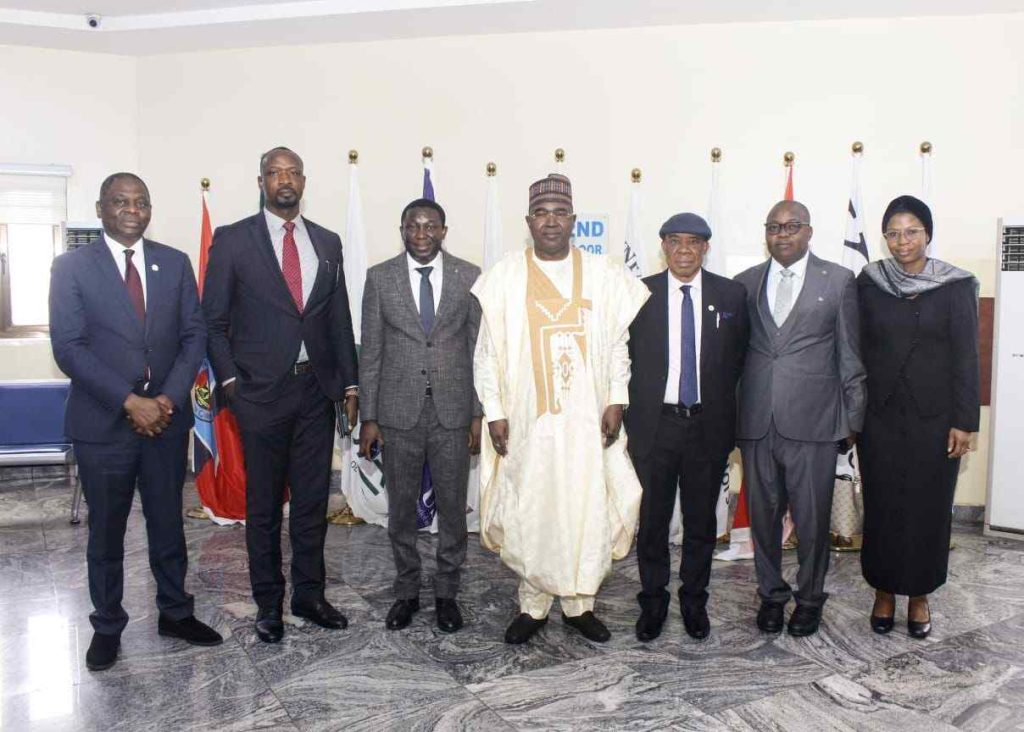
The training has brought together personnel from the NDLEA's intelligence, investigation, prosecution, forensic and financial-investigation units.
Representatives of the Economic and Financial Crimes Commission (EFCC), Independent Corrupt Practices and Other Related Offences Commission (ICPC), Nigeria Financial Intelligence Unit (NFIU) and judges of the Federal High Court are also participating.
The mix is significant because financial investigations often require information and expertise that sit outside a drug enforcement agency.
The NFIU, for example, plays a central role in Nigeria's financial intelligence architecture, while the EFCC investigates financial crimes.
Courts ultimately determine legal questions around prosecution and forfeiture.
The Chief Judge of the Federal High Court, Justice John Terhemba Tsoho, welcomed the collaboration.
In a goodwill message delivered by Justice Inyang Ekwo, Justice Tsoho said the programme could strengthen institutional capacity in financial investigations, asset tracing and recovery, including cases involving cryptocurrency-enabled money laundering.
“His Lordship, the Chief Judge, expresses his delights to be part of this programme which is designed to strengthen institutional capacity in financial investigation, asset tracing for future recovery, and management of proceeds and instrumentalities of narcotic trafficking and related crimes, including cyber currency-enabled money laundering.”
He added: “His Lordship is of the opinion that this topic shows how extensive and multifaceted drug crimes are and can be, and their ever-expanding frontiers, which ought to be tackled by effective and sophisticated law enforcement.”
Justice Tsoho also commended Marwa's leadership of the NDLEA and stressed the importance of cooperation between the judiciary and law-enforcement agencies.
“His Lordship appreciates and commends you, the Chairman/Chief Executive of NDLEA, for your commendable strides since the assumption of office as the Chairman and Chief Executive.
His Lordship believes that collaboration between the Federal High Court and law enforcement agencies, especially the NDLEA, will put this nation on a proper spotlight when it comes to law enforcement in the international circle."
Also Read: NBSA Gives FCT Health Facilities September Deadline to Register for Blood Services
What does this mean for drug traffickers?
If implemented effectively, the financial-investigation strategy could move enforcement further up the chain of drug organisations.
Instead of focusing primarily on people transporting or possessing drugs, investigators would seek evidence connecting financiers, asset owners, money launderers and other facilitators to the criminal enterprise.
That could make investigations more complex.
Officers would need to establish beneficial ownership, analyse financial transactions, gather digital evidence and trace assets across jurisdictions.
It also creates new risks. Cryptocurrency and international financial transactions can cross borders quickly, while complex ownership structures can make it difficult to establish who actually controls an asset.
Training alone will not prove the strategy worksThe Abuja programme is a capacity-building exercise.
It does not, by itself, demonstrate that the NDLEA has successfully dismantled the financial structures of major drug cartels.
That distinction matters.
The real test will come when investigators use the skills gained to produce stronger financial cases, obtain convictions and forfeiture orders, recover assets and demonstrate where recovered wealth ultimately goes.
The NDLEA says participants should return to their respective directorates and translate the training into coordinated enforcement.
Marwa urged intelligence, investigation, prosecution, forensics and financial-investigation officers to work as one chain rather than separate units.
What happens next?
The agency's immediate task is to turn the training into operational results.
That means identifying the financial networks behind drug shipments, linking assets to criminal activity through admissible evidence and working with financial-intelligence bodies and the courts to pursue recovery.
For the public, the key measure will not simply be the number of people arrested or tonnes of drugs seized.
It will be whether Nigeria can demonstrate that the people financing and profiting from the drug trade are being identified, prosecuted and deprived of the wealth that keeps their networks operating.