The Guild of Medical Directors (GMD), Lagos State Chapter, has called on private hospitals to strengthen their preparedness for emerging and re-emerging diseases while building healthcare systems that can continue to function beyond the individual doctors who founded them.
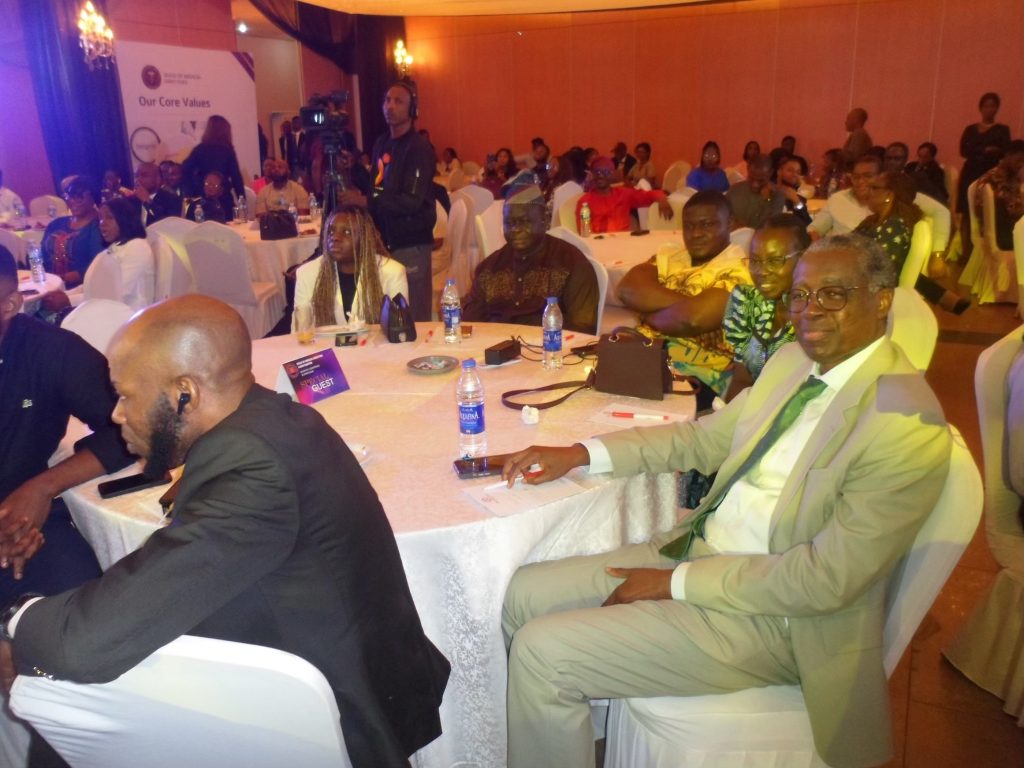
The call came at the GMD Lagos 2026 Scientific Conference and Annual General Meeting held at the Oriental Hotel, Victoria Island, Lagos, on Friday, October 2.
The conference focused on “Emergency Preparedness for Emerging and Re-emerging Diseases”, bringing together medical directors and healthcare professionals to discuss infection prevention, healthcare management, leadership and the sustainability of private medical practice.
The issue is particularly significant in Lagos, where population density and the large role of private providers can affect how quickly patients are diagnosed, treated and referred during disease outbreaks.
The African Health Observatory Platform estimates that private providers account for about 70 per cent of healthcare services in Nigeria, while noting that mechanisms for engaging and regulating the private sector remain weak.
Preparedness starts before an outbreak
In his welcome address, GMD Lagos Chairman, Dr Omoniyi Fagbemi, stressed the need for private medical practitioners to prepare for emergencies rather than wait for outbreaks before strengthening their facilities.
He recalled Nigeria’s experience with the 2014 Ebola outbreak and the role played by the late Dr Ameyo Stella Adadevoh and First Consultants Hospital in containing the disease.
Fagbemi said the lessons from previous outbreaks showed why private healthcare facilities needed systems capable of protecting patients, staff and the wider community.
The Guild has also said its members should participate in quality improvement programmes as part of efforts to improve standards in private medical practice.
The emphasis on preparedness comes as Nigeria continues to deal with infectious disease threats, including Lassa fever. NCDC data for epidemiological week 33 of 2026 recorded 1,035 confirmed Lassa fever cases and 252 deaths as of August 16.
That makes infection prevention and early detection issues not only for government hospitals but also for private facilities where many patients first seek care.
‘Infection prevention is not a department’
One of the central presentations at the conference focused on infection prevention and control (IPC).
Dr Olayemi Dawodu, Anatomical and Pathologist and Managing Director/Chief Executive Officer of Cerba Lancet Nigeria, argued that IPC should be treated as a core responsibility of hospital leadership rather than the job of a single department.
“Infection prevention is not a department, it’s not a departmental activity, but it’s a standard of care that is driven by governance.”
Her presentation highlighted the need for private hospitals to strengthen surveillance, staff training, hand hygiene, laboratory capacity, outbreak preparedness and monitoring of healthcare-associated infections.
The World Health Organisation has identified effective IPC programmes as an important tool for reducing healthcare-associated infections and says good IPC programmes can prevent up to 70 per cent of such infections.
Dawodu proposed a 90-day approach for GMD members, including appointing an IPC focal person, conducting facility assessments, introducing monitored hand-hygiene programmes, beginning surgical-site infection surveillance, developing facility antibiograms and conducting outbreak-readiness drills.
These were presented as recommendations for implementation rather than evidence that all GMD facilities have already adopted the measures.
From growing hospitals to healthcare enterprises
The conference also examined a problem that extends beyond clinical care: how private hospitals can grow without becoming increasingly dependent on their founders.
Dr Ayobami Kuyoro, Managing Director of Iwosan Lagoon Hospital, addressed the issue in his presentation, “The Business of Medicine: Systems, Strategy and Leadership for a Healthcare Enterprise Built to Last.”
He drew a distinction between growth and scale.
“Growth is opening up another branch, you’re seeing more patients, you’re adding more services, you’re increasing your revenue, but scale is different.”
According to Kuyoro, a hospital can increase its branches, services and revenue while simultaneously becoming more complicated to manage.
He argued that genuine scale requires systems that distribute decision-making, use data and reduce dependence on a single doctor.
“Scale is where you have a system that releases dependency on one person…”
His argument was that medical directors should build organisations capable of functioning effectively when the founder is absent.
“Your greatest strength is what an organisation can do without you.”
‘Will the practice die with him?’
Dr Festus Odunayo Abimbola Oshoba, First Vice President of the Guild of Medical Directors and CEO of LADKEM Specialist Eye Hospital, spoke to Olokuns Media Network in an interview on the sidelines of the conference.
Oshoba focused on succession planning and the vulnerability of private medical practices that remain heavily dependent on their owners.
He asked:
“Since most of the healthcare delivery is given by private doctors, it is given by private doctors when the doctor is sick, when he is disabled, or when he dies, will the practice die with him?”
The question goes beyond succession in individual businesses.
For patients, the continuity of a hospital can affect access to records, treatment, specialist services and follow-up care when a founder retires or can no longer run the facility.
Oshoba also stressed that doctors running private hospitals need to understand the financial and operational side of healthcare, including staff salaries, electricity costs and other expenses required to keep facilities running.
He called for improved access to credit and greater government support for private healthcare providers.
Also Read: Nigeria Eye Bank: Over 200 Patients Await Cornea Transplants
https://olokunsmedianetwork.com/2026/08/20/nigeria-eye-bank-over-200-patients-await-cornea-transplants/
Quality care comes at a cost
The affordability of healthcare was another major issue raised during the event.
In an interview, Dr Raymond Abiodun Kuti, National President of the Guild of Medical Directors, said Nigerian doctors possess the skills required to deliver quality healthcare but face high operating costs linked to infrastructure, equipment, electricity, medicines and maintenance.
“Qualitative medicine is not cheap. But how can we make people get qualitative medicine at affordable price?”
Kuti argued that government could make greater use of private hospitals in delivering primary healthcare, with appropriate funding and oversight.
The proposal raises a broader question about how Nigeria can expand access to healthcare without transferring unsustainable costs to patients or private providers.
Nigeria’s health system already relies heavily on private providers, making the relationship between government and private healthcare operators important to efforts to expand coverage. The African Health Observatory has similarly identified stronger public-private engagement as relevant to achieving universal health coverage.
Technology is not a substitute for good systems
Technology also featured prominently in the discussions.
Kuyoro cautioned hospitals against adopting technology simply because it is available.
“A digital version of a broken system is still a broken system.”
He said hospitals should first identify the problem, redesign the process, determine what data is required and establish how success will be measured before introducing technology.
Other presentations at the conference demonstrated digital healthcare products, including electronic medical records, enterprise resource planning, telemedicine and digital prescribing.
Those demonstrations were commercial product presentations and should therefore be distinguished from independently verified evidence of the effectiveness of the products.
What this means for patients
For patients, the issues discussed at the conference are ultimately about more than hospital management.
Better infection prevention can reduce avoidable infections. Stronger disease surveillance can improve the early detection of outbreaks. Better succession planning can help hospitals maintain services when their founders are no longer available.
But implementation will determine whether these ideas translate into better care.
The GMD’s proposed infection-control measures, for example, will require hospitals to dedicate staff time, training, laboratory support and financial resources.
The Guild’s challenge will therefore be to move from conference recommendations to measurable improvements across member facilities.
What happens next?
The conference placed three issues at the centre of the future of private healthcare in Nigeria: preparedness, quality and sustainability.
For individual hospitals, that means having clear infection-control responsibilities, reliable data, trained staff, emergency plans and systems that do not depend entirely on one doctor.
For policymakers, the discussions raise questions about how private providers can be integrated into disease surveillance, primary healthcare and emergency response while maintaining appropriate regulation and accountability.
And for patients, the practical test is straightforward: whether these reforms eventually produce safer, more accessible and more reliable healthcare.
The GMD’s message from Lagos was that expanding a hospital is not enough. Private healthcare providers must also build institutions capable of surviving outbreaks, leadership changes and the departure of their founders.