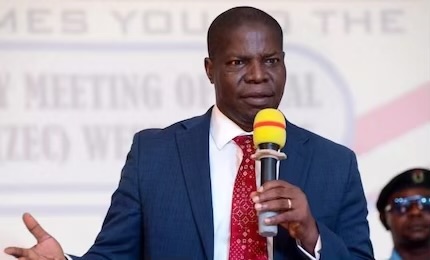

Olusegun Agagu University of Science and Technology (OAUSTECH) Vice-Chancellor, Prof. Temi Emmanuel Ologunorisa, has urged Nigerians to renew their commitment to national development as the country marks its 66th Independence Anniversary.
In an Independence Day message issued on Thursday, 1 October 2026, Ologunorisa called for greater commitment to peace, hard work, integrity and good governance.
He also urged Nigerians to remain united and hopeful despite the challenges confronting the country.
The Vice-Chancellor said universities have a role to play in addressing those challenges, particularly through education, research and innovation.
He said OAUSTECH would continue to contribute to national development through quality teaching, research and technological innovation.
Why the message matters
The anniversary comes as Nigeria continues to face economic and governance challenges, while the Federal Government has framed reforms and economic recovery as central to its current policy agenda.
In his 2026 Independence Day address, President Bola Ahmed Tinubu also described Nigeria as a country with significant potential and said the government’s reform agenda was aimed at moving the country towards greater prosperity.
For universities such as OAUSTECH, the wider question is how institutions can turn commitments to research and innovation into practical solutions that benefit students, businesses, government and communities.
OAUSTECH was established by the Ondo State Government as a science and technology university. Its stated mandate includes producing manpower for industrial and technological development in Ondo State and Nigeria.
Ologunorisa commends staff
Ologunorisa also used the anniversary message to recognise the contribution of OAUSTECH staff to the university.
He described their dedication and service to the institution as part of their service to Nigeria.
The VC said the university would continue to focus on teaching, research and innovation as part of its contribution to the country.
That emphasis follows recent activity at the institution. OAUSTECH held a Research and Innovation Fair in September 2026, while the university has also continued to expand its postgraduate programmes.
The university’s published history shows that its first students were formally matriculated in March 2011 after efforts to secure the institution’s operating licence and establish the infrastructure needed for academic activities.
Also Read: Ondo releases funds for OAUSTECH workers under 2025 wage agreement https://olokunsmedianetwork.com/2026/10/02/ondo-releases-funds-for-oaustech-workers-under-2025-wage-agreement/
From Independence message to institutional responsibility
Ologunorisa’s 2026 message is not the first time he has used Nigeria’s Independence anniversary to address the OAUSTECH community.
In his 2025 Independence Day message, he asked staff and students to reflect on the country’s progress and challenges while reaffirming their commitment to building a better future.
The difference in the 2026 message is its stronger emphasis on the university’s role in national development through science, technology and research.
That places responsibility not only on government but also on institutions that train professionals and generate knowledge.
For students and staff, the practical test will be whether these commitments translate into stronger teaching, useful research, innovation opportunities and improved institutional conditions.
Wider implications
OAUSTECH’s role also matters beyond its campus in Okitipupa.
The university was created partly to support industrial and technological development in Ondo State. Its science and technology focus gives it a potential role in areas such as agriculture, engineering, environmental research and other sectors that affect the regional economy.
The university has also recently highlighted developments affecting staff welfare. In July 2026, OAUSTECH reported that its Vice-Chancellor commended the Ondo State Government over a 60 per cent increase in subvention and the approval of the 2026 implementation of Federal Government agreements with university-based unions.
Such measures have implications for the university’s ability to maintain teaching and research activities, although the longer-term effect will depend on implementation and the institution’s wider financial and administrative capacity.
For students, improved institutional stability can affect the continuity and quality of academic programmes. For Ondo State and the wider public, the value of the university will ultimately depend on how effectively its academic and research capacity produces measurable benefits.
What happens next?
Ologunorisa ended his Independence message by urging Nigerians to remain committed to peace, hard work, integrity and good governance.
He wished OAUSTECH staff and students, the people of Ondo State and Nigerians at home and abroad a peaceful Independence anniversary.
The anniversary therefore provides both a moment of celebration and an opportunity to assess how institutions such as OAUSTECH turn their stated commitment to national development into measurable outcomes.
For a university established to advance science and technology, the next stage is clear: translating research, teaching and innovation into practical solutions that respond to the needs of its students, its host state and Nigeria.